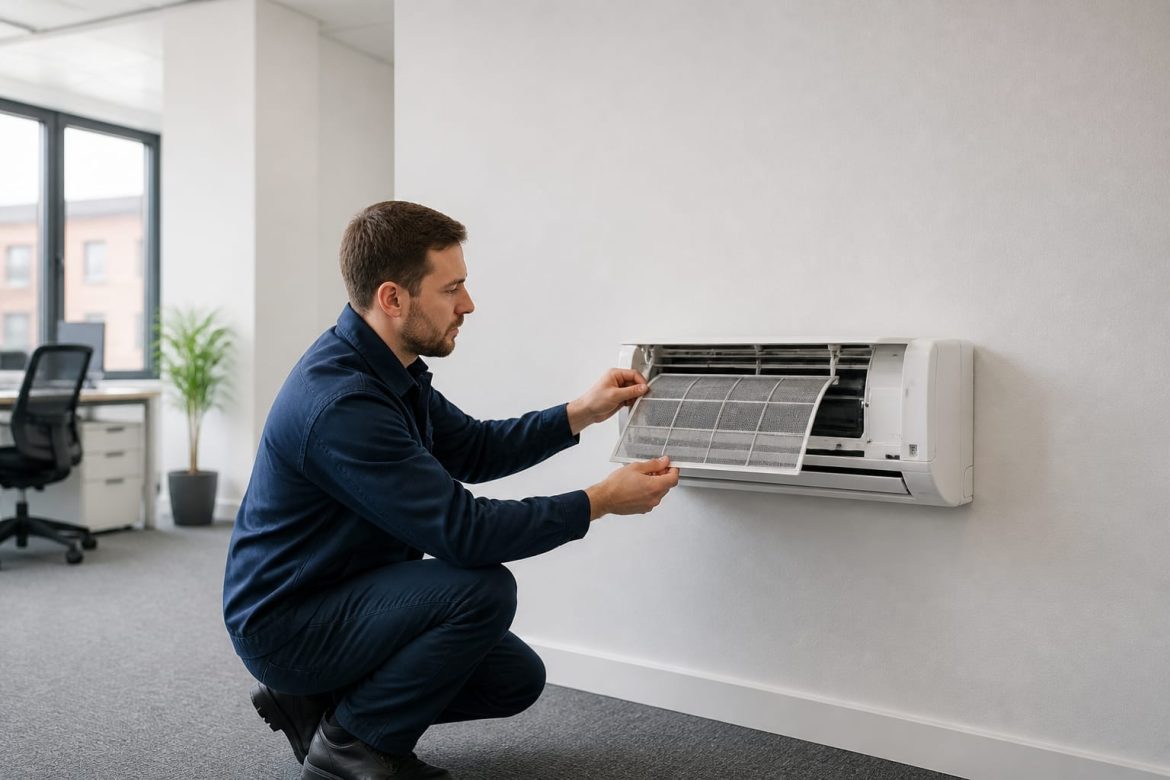
The frequency of servicing depends on a variety of factors including the size and type of air conditioning system, how frequently it is used and how heavily it is working.
The Standard Twice-Yearly Check
For systems such as domestic air conditioning, single room split units and small office split air conditioning (like a 2-3 floor office building with split units on each floor), a service in the Spring prior to the start of cooling and then again in the Autumn after the end of cooling is recommended. This ensures any problems that may have occurred over the Winter months are detected and the system is made ready for the first hot spell of the year. The Autumn service allows for a clean of any heavy use over the Summer and is best carried out before the system is left idle for long periods over the Winter.
Constant-Use Systems Need More Attention
Constant-Use Systems Need More Attention. A server room, comms cabinet or retail store running air conditioning 24/7/365 is subject to far greater wear and tear than air conditioning running only on warm afternoons. For such constant-Use systems, quarterly servicing is likely to be more cost-effective in the long term. For such systems, a filter cleaning is often sufficient between engineer visits but it is also highly-recommended that these are done on a monthly basis (if possible) during periods of very high use.
Filter Cleaning Versus a Full Service
Of course, there’s the obvious maintenance job of cleaning or replacing filters. This should be done about once a month during peak periods but that’s a separate task from a full service which involves checking refrigerant pressure, checking electrical connections, testing the condensate drain and checking the condition of coils and fan motors etc. Many people get these two confused but they’re very different.
Legal Leak Checks on Larger Systems
The F-Gas regulations governing refrigerant leak checks for air conditioning systems detail the periodic checks required for systems containing different quantities of refrigerant. For larger quantities of refrigerant, such as found in very large commercial air conditioning systems, checks as frequently as every 3 months may be required. See also Air conditioning Gloucester.
Commercial Systems Need Closer Monitoring
A single domestic split unit will require servicing in much the same way as other single split air conditioning systems but a multi-split or VRF system will have many more indoor units and possibly longer pipework containing refrigerant. Each indoor unit would be checked as well as the outdoor condenser unit and this type of work can take a lot longer than checking a single bedroom unit and therefore would require more frequent checks.
Warranty Terms Often Demand Proof
Warranty conditions relating to servicing typically require that the system is serviced annually by a suitably qualified engineer and in some cases even that the servicing is carried out by a specific contractor or companies from a list provided by the manufacturer. Many people fail to realise that not having a service every year could result in a claim being refused even though the unit appears to be working satisfactorily. The terms and conditions of the warranty must be read and included on any correspondence to ensure that all requirements have been met.
Older Units Need Closer Watching
Older equipment needs to be checked more frequently. After 7-8 years of age many components such as fan bearings, capacitors and seals can start to deteriorate. This can be detected before they fail on a hot day by conducting a number of service visits throughout the year. In terms of electrical safety guidance for home appliances, many safety bodies recommend that older equipment is checked more frequently as the likelihood of worn wiring and failing components increases with age.
Keep Dated Records of Every Visit
The simplest way to ensure that you have adequate dated evidence of servicing of your Air Conditioning system(s) is to keep a folder containing all the invoices for the servicing completed. e. ‘serviced’, but it is surprising how many owners fail to retain up-to-date records of servicing of their systems. Also check that any engineer completing a service for you is part of a government-endorsed scheme of trusted installers.
So get the frequency of your services right, store up the evidence of them having taken place, and hopefully you will avoid a nasty collapse on the very hottest day of the year.