Waking up with shooting pain down your leg is not a good way to start the day. For people living with sciatica, nighttime can be one of the hardest parts of the day to manage. The pain often gets worse when you lie still for hours. However, the right pillow — placed in the right spot — can make a real difference. This guide explains exactly what to look for so you can sleep better and wake up feeling more like yourself.
What Is Sciatica and Why Does It Hurt at Night?
Sciatica is a type of pain that travels along the sciatic nerve. This nerve runs from your lower back, through your hips and buttocks, and down each leg. When something presses on this nerve — such as a herniated disc or a tight muscle — pain, tingling, or numbness can follow.
At night, things get complicated. You are not moving around, so you cannot shift your weight to find relief the way you might during the day. Additionally, certain sleeping positions put extra pressure on the lower spine and the sciatic nerve. This pressure builds over hours, which is why many people wake up feeling worse than when they went to bed.
The right pillow helps by keeping your spine aligned and reducing pressure on the nerve. It is a simple tool, but it works remarkably well when used correctly.
How Your Sleeping Position Affects Sciatica Pain
Before you choose a pillow, you need to understand how your sleeping position affects your pain. Different positions create different pressure points. Therefore, the ideal pillow setup depends entirely on how you sleep.
Sleeping on Your Side
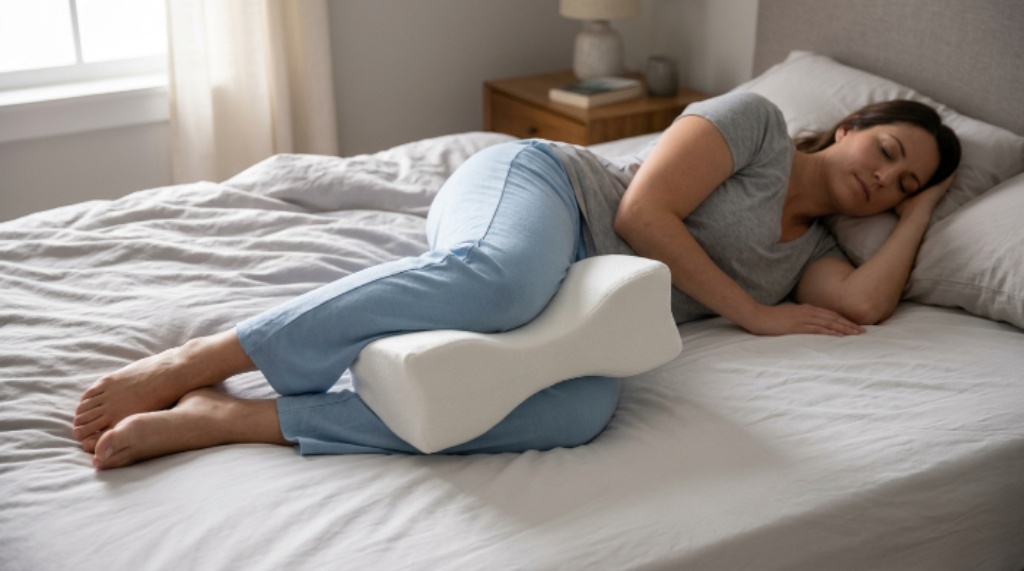
Side sleeping is generally the best position for sciatica sufferers. It reduces spinal compression and takes pressure off the affected nerve. However, if you do not support your hips and knees properly, your spine can still twist out of alignment. Placing a pillow between your knees solves this problem. It keeps your hips, pelvis, and lower spine in a neutral position throughout the night.
Sleeping on Your Back
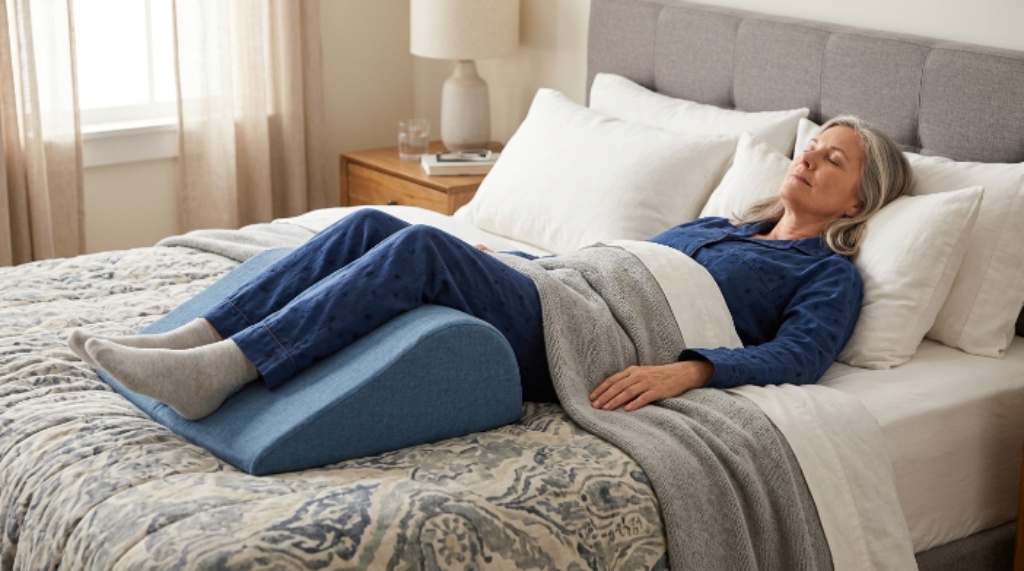
Back sleeping is also a good option for many people with sciatica. The key is to keep your knees slightly elevated. A leg elevation pillow placed under your knees does exactly this. It flattens the curve of the lower back, which relieves pressure on the discs and the sciatic nerve. Many people find this position provides almost instant relief.
Sleeping on Your Stomach
Stomach sleeping is generally the worst position for sciatica. It forces your neck to twist and puts your lower back into an exaggerated arch. If you cannot break this habit, try placing a flat pillow under your pelvis to reduce the arch. Even so, transitioning to a different position will serve you better in the long run.
What to Look for in a Pillow for Sciatica
Not every pillow is designed to support the specific needs of someone with sciatica. Here are the key features to keep in mind when shopping.
Firmness and Support
Soft, fluffy pillows feel comfortable at first. However, they compress quickly and stop providing support within an hour or two. Look for a pillow with medium to firm density. Memory foam is a popular choice because it conforms to the shape of your body while still holding its structure.
Shape and Design
The shape of the pillow matters as much as the material. A contoured or wedge-shaped design is often more effective than a standard rectangular pillow. Wedge pillows, in particular, are excellent for both back and side sleepers. They hold their angle all night and do not shift around.
Size and Placement
A pillow that is too small will not cover enough surface area to be useful. A pillow that is too large may push you into an awkward position. For knee support, a pillow that fits comfortably between your thighs and knees without feeling bulky works best. For back support, the pillow should fill the gap between your knees and the mattress without lifting them too high.
Cover Material
Look for a removable, washable cover. Sciatica flare-ups often come with inflammation and discomfort that can disrupt sleep and cause night sweats. A breathable, hypoallergenic cover keeps things clean and comfortable.
The Best Types of Pillows for Sciatica Relief
There are a few specific pillow types that work particularly well for sciatica sufferers. Each serves a slightly different purpose.
Knee Pillow for Side Sleepers
This is a contoured pillow designed to sit between your knees while you sleep on your side. It holds your legs in a parallel position, which prevents your top hip from rotating forward and twisting your lower spine. Many knee pillows have a slight hourglass shape that keeps them from slipping during the night.
Wedge Pillow for Back Sleepers
A wedge pillow is a triangular foam pillow. When placed under your knees during back sleeping, it acts as a leg elevation pillow that gently lifts your legs and reduces the curve in your lower back. This takes direct pressure off the lumbar region and the sciatic nerve. Some people also use a smaller wedge pillow under their lower back for added lumbar support.
Lumbar Support Pillow for Adjustable Beds
If you use an adjustable bed frame, a lumbar support pillow can add a layer of targeted support to your lower back while you sleep in a semi-reclined position. This is especially helpful for those who find it easier to fall asleep sitting slightly upright.
Full-Body Pillow for Combination Sleepers
Some people shift positions throughout the night without realizing it. A full-body pillow gives you continuous support regardless of how you move. You can hug it to keep your upper body aligned and place it between your knees to support your hips at the same time.
Additional Tips for Sleeping with Sciatica
A good pillow helps, but it works even better when combined with other nerve pain sleeping tips. Here are a few habits worth building.
- Stretch gently before bed. A few minutes of light stretching can loosen tight muscles around the sciatic nerve and make it easier to fall asleep comfortably.
- Apply heat before lying down. A heating pad on your lower back for 15 to 20 minutes before bed relaxes the muscles and reduces nerve irritation.
- Check your mattress. A mattress that is too soft or too old may be undermining everything your pillow is doing. Medium-firm mattresses tend to work best for sciatica sufferers.
- Avoid long periods of sitting before bed. Sitting for extended periods compresses the sciatic nerve. Try to move around in the hour before you go to sleep.
- Stay consistent with your sleeping position. Changing positions frequently throughout the night can disrupt spinal alignment and worsen morning pain.
How to Test Whether Your Pillow Setup Is Working
Give any new pillow setup at least two weeks before drawing conclusions. Your body needs time to adjust to a new sleeping position. However, there are signs that tell you whether you are on the right track.
You are making progress if you wake up with less stiffness than before, if you find it easier to get out of bed in the morning, or if your leg pain is less intense in the first hour after waking. On the other hand, if your pain is the same or worse after two weeks, try adjusting the placement of your pillow or consider switching to a different type.
Conclusion
Living with sciatica does not have to mean accepting poor sleep as a fact of life. The right pillow, placed in the right position, can reduce nerve pressure and help your body rest and recover overnight. Side sleepers benefit most from a knee pillow that keeps the hips aligned. Back sleepers often find relief with a leg elevation pillow tucked under their knees. Those who need extra lower back support can benefit from a lumbar support pillow, especially on adjustable beds.
Beyond pillows, small habits like stretching before bed, applying heat, and checking your mattress all add up. By combining the right tools with the right routines, you give your body the best possible chance to heal — one good night of sleep at a time.
Frequently Asked Questions
What is the best sleeping position for sciatica?
Side sleeping with a pillow between your knees is widely considered the best position for sciatica. It keeps the spine neutral and takes pressure off the sciatic nerve. Back sleeping with a pillow under the knees is also a solid option.
Can the wrong pillow make sciatica worse?
Yes. A pillow that is too soft, too thick, or poorly placed can push your spine out of alignment. This increases pressure on the sciatic nerve and may worsen pain and stiffness by morning.
How long does it take to feel relief from using a new pillow?
Most people notice some improvement within one to two weeks. Give your body time to adjust to the new support. If pain does not improve after two weeks, try a different placement or pillow type.
Should I use a pillow under my back or under my knees?
It depends on your sleeping position. Back sleepers usually benefit more from a pillow under the knees. Side sleepers need a pillow between the knees. Some back sleepers use both — one under the knees and a thin one under the lower back.
Is memory foam the best material for a sciatica pillow?
Memory foam is one of the most popular choices because it conforms to the body while maintaining firm support. However, latex foam and high-density polyfoam are also effective. The best material is one that holds its shape through the night without going flat.
Related Topics:
How to Buy a King Bedroom Set for Your Home
How to Choose Modern Queen Bedroom Sets for a Chic & Cozy Room