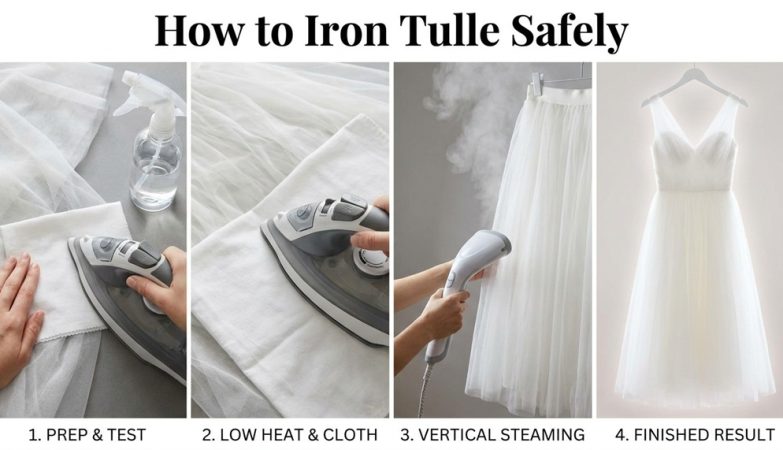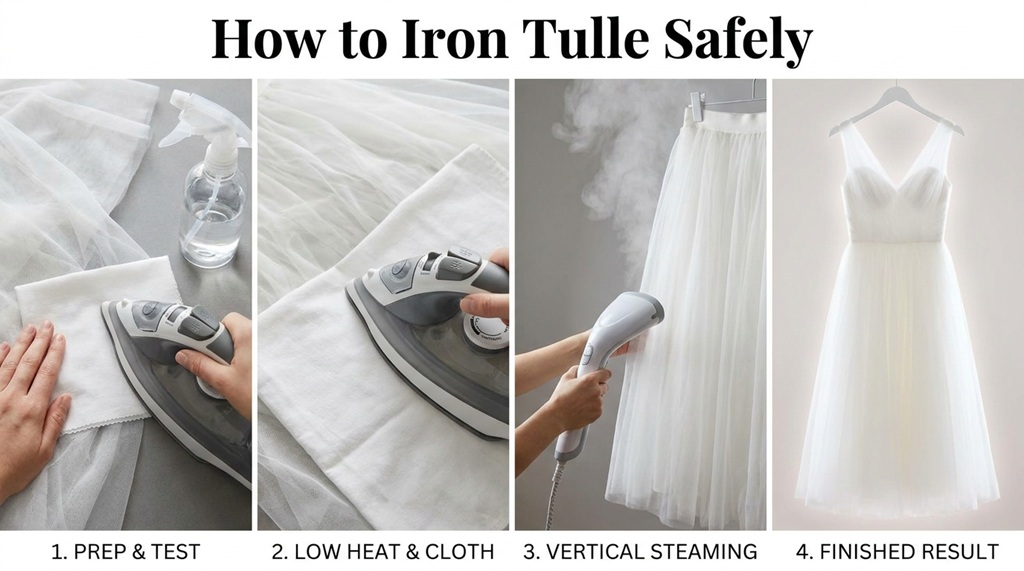
The safest way to iron tulle is to use the lowest heat setting, place a pressing cloth between the iron and fabric, and avoid direct contact whenever possible. Tulle melts easily because it is usually made from nylon or polyester, so gentle steaming or indirect heat is always safer than standard ironing.
What Is Tulle Fabric and Why Is It Difficult to Iron?
Tulle is a lightweight mesh fabric made from synthetic fibers like nylon, polyester, or silk, and it wrinkles easily while melting quickly under heat.
Tulle appears delicate because it is constructed with a fine hexagonal net structure rather than a tight weave. This open structure gives it volume and transparency but also makes it vulnerable to deformation. Even moderate heat can shrink, fuse, or distort the mesh permanently.
Most modern tulle used in wedding dresses, veils, ballet skirts, and party decorations is synthetic. Nylon begins softening around 180°C (356°F), and polyester around 250°C (482°F). Household irons can exceed these temperatures quickly, especially without regulation.
That means ironing tulle incorrectly often causes:
- Permanent melting
- Texture distortion
- Glossy heat marks
- Warped mesh structure
- Loss of volume
Understanding these risks helps explain why careful preparation matters more than the ironing itself.
Can You Iron Tulle Directly With a Regular Iron?
No, direct contact between a hot iron and tulle should be avoided unless a protective pressing cloth is used and the heat is extremely low.
Direct ironing is the most common cause of damaged tulle garments. Because synthetic fibers respond instantly to heat, even a few seconds of contact can permanently alter the material.
If direct ironing is unavoidable, always:
- Set the iron to the lowest synthetic setting
- Turn off steam initially
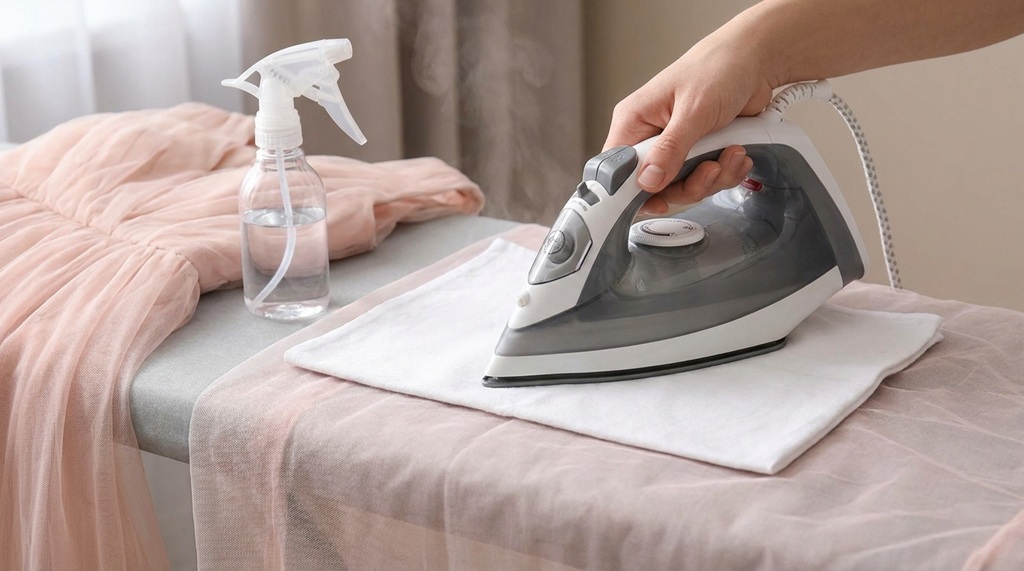
- Place a cotton pressing cloth over the fabric
- Test on a hidden corner first
Professional garment finishers rarely iron tulle directly. Instead, they rely on indirect steam relaxation techniques.
What Is the Safest Method to Remove Wrinkles From Tulle?
The safest method to remove wrinkles from tulle is steaming rather than ironing because steam relaxes fibers without direct heat contact.
Steaming works by allowing warm moisture to loosen the mesh structure so it returns to its natural shape. This reduces the risk of melting while preserving softness.
Safe steaming steps include:
- Hang the garment vertically
- Keep the steamer 15–20 cm away
- Move slowly downward
- Let fabric air dry naturally
Bridal stylists widely recommend steaming because wedding gowns often contain layered tulle that cannot tolerate ironing pressure.
How Do You Iron Tulle Step by Step Without Causing Damage?
To iron tulle safely, use the lowest heat setting, place a pressing cloth over the fabric, and press lightly without sliding the iron.
Follow this controlled method:
Step 1: Check Fabric Composition
Always confirm whether the tulle is nylon, polyester, silk, or blended before applying heat.
Synthetic blends require lower temperatures than silk tulle, which tolerates slightly more heat.
Step 2: Prepare a Pressing Cloth
A cotton pressing cloth protects the mesh structure from direct heat exposure.
Use plain cotton fabric such as a pillowcase or muslin square.
Step 3: Adjust Iron Temperature
Select the synthetic or delicate setting on the iron before touching the fabric.
If your iron does not show temperature labels, start at the lowest level.
Step 4: Test a Hidden Area
Testing prevents visible damage if the heat level is too high.
Try a seam allowance or inner layer first.
Step 5: Press Instead of Glide
Lift-and-press movements prevent stretching or distortion of the mesh.
Sliding an iron across tulle stretches fibers unevenly.
Step 6: Let Fabric Cool Before Handling
Cooling allows fibers to stabilize and maintain shape.
This step is often overlooked but essential.
Is Steaming Better Than Ironing for Tulle Fabric?
Yes, steaming is safer than ironing because it removes wrinkles without applying direct pressure or excessive heat.
| Method | Safety Level | Effectiveness | Best Use Case |
|---|---|---|---|
| Steaming | Very High | Excellent | Wedding dresses, skirts, veils |
| Pressing cloth ironing | Moderate | Good | Flat decorative panels |
| Direct ironing | Low | Risky | Only when unavoidable |
Professional garment studios almost always steam layered mesh fabrics instead of ironing them.
Can You Remove Wrinkles From Tulle Without an Iron or Steamer?
Yes, wrinkles can be removed using shower steam, gravity hanging, or low-temperature hair dryer airflow.
Alternative wrinkle-removal techniques include:
- Hanging tulle in a steamy bathroom
- Using a garment spray bottle lightly
- Letting fabric rest overnight
- Using cool air from a dryer
These methods work especially well for decorative tulle backdrops and event draping.
What Temperature Is Safe for Ironing Tulle Fabric?
Tulle should be ironed below 110°C (230°F) unless it is silk-based, which tolerates slightly higher temperatures.
Typical safe ranges:
- Nylon tulle: under 100°C
- Polyester tulle: under 110°C
- Silk tulle: up to 148°C with caution
Always confirm labels before applying heat because blends vary widely.
How Do You Iron a Tulle Dress Without Flattening Its Shape?
Iron a tulle dress by steaming vertically instead of pressing layers flat on an ironing board.
Tulle dresses rely on volume rather than structure. Flattening them reduces their appearance dramatically.
Best practice includes:
- Using a hanger during steaming
- Working layer by layer
- Supporting fabric with one hand
- Avoiding compression
Bridal stylists often allow dresses to hang for 24 hours after steaming to restore full shape.
Can Ironing Melt Polyester or Nylon Tulle?
Yes, both polyester and nylon tulle can melt instantly under high heat or direct iron contact.
Synthetic fibers soften before melting, which causes shiny patches or stiffened mesh. Once this happens, damage cannot be reversed.
According to textile engineering research, thermoplastic fibers permanently deform when exposed to temperatures near their softening points. That makes preventive handling essential.
Should You Use Steam or Dry Heat When Ironing Tulle?
Steam is safer than dry heat because moisture reduces the need for direct temperature exposure.
Dry heat concentrates thermal energy on one surface area, increasing melting risk.
Steam distributes warmth gradually and evenly, allowing mesh fibers to relax naturally.
How Do Professionals Remove Wrinkles From Wedding Tulle?
Professionals remove wrinkles from wedding tulle using vertical steamers, layered airflow drying, and gravity-based reshaping.
Wedding gown specialists typically:
- Hang garments on padded hangers
- Steam from top to bottom
- Separate layers manually
- Allow 12–24 hours settling time
This process preserves silhouette integrity while eliminating creases.
What Common Mistakes Damage Tulle During Ironing?
The most common mistakes include high heat settings, skipping pressing cloths, and ironing multiple layers at once.
Avoid these frequent errors:
- Using cotton setting on the iron
- Pressing directly onto mesh
- Ironing folded layers together
- Holding iron too long in one spot
- Skipping test patches
Even experienced garment handlers occasionally damage tulle by rushing preparation steps.
Can You Iron Tulle Curtains or Decorations Safely?
Yes, tulle curtains can be ironed safely using low heat and a pressing cloth, but steaming while hanging is more effective.
Large decorative panels respond better to gravity-assisted wrinkle removal.
Event decorators often steam installations directly after hanging because it saves time and reduces handling damage.
Conclusion: What Is the Safest Way to Keep Tulle Smooth and Wrinkle-Free?
The safest way to keep tulle wrinkle-free is gentle steaming, indirect ironing when necessary, and proper hanging storage.
Tulle remains one of the most visually striking yet delicate fabrics used in fashion and décor. Because it melts quickly under heat, careful technique matters more than speed. Using a pressing cloth, choosing the lowest temperature setting, and relying on steam instead of direct ironing dramatically reduces the risk of permanent damage.
Whether you are preparing a wedding dress, styling event decorations, or refreshing layered skirts, the key principle remains consistent: avoid direct heat whenever possible. With the right approach, tulle retains its airy structure and elegant finish for years.
If you frequently handle delicate fabrics at home, adopting steaming as your default wrinkle-removal method will save time, protect garments, and improve results across multiple fabric types.
Frequently Asked Questions About Ironing Tulle Safely
Can you iron tulle with parchment paper?
Yes, parchment paper can act as a temporary heat barrier, but a cotton pressing cloth is safer and more breathable.
Will steaming shrink tulle fabric?
No, steaming does not shrink synthetic tulle when used at a safe distance.
Can a hair dryer remove wrinkles from tulle?
Yes, a hair dryer on low heat can relax wrinkles if held several inches away from the fabric.
How long should you steam tulle?
Most wrinkles disappear within 30–90 seconds per section depending on thickness.
Is silk tulle easier to iron than polyester tulle?
Yes, silk tulle tolerates slightly higher temperatures but still requires careful handling.
Can you put tulle in a dryer to remove wrinkles?
Only air-fluff dryer settings without heat are safe for wrinkle removal.
Why does tulle become shiny after ironing?
Shiny areas appear when synthetic fibers partially melt under excessive heat.
Don’t Miss These Articles: Three common knitting mistakes to look out for
Up Next: How to Style a Dining Room Table