How to fix a sticking interior door is one of the most common home repair questions homeowners search online. A door that drags, sticks, or refuses to close smoothly is frustrating. It slows daily routines and may damage the door frame over time. The good news: most sticking doors can be fixed in less than 30 minutes using simple tools.
According to a housing maintenance survey published by the U.S. National Association of Home Builders, interior door alignment issues are among the top five minor repairs homeowners handle themselves. In most cases, the cause is simple: humidity expansion, loose hinges, or misaligned strike plates.
This guide explains how to fix a sticking interior door step by step using practical DIY methods. You’ll learn how to identify the exact problem, choose the right repair method, and prevent the issue from happening again. The goal is simple: restore smooth door movement without expensive repairs.
Whether your door sticks at the top corner, drags on the floor, or refuses to latch, the fixes below are proven, quick, and beginner-friendly.
What Does It Mean When an Interior Door Sticks?
A sticking interior door means the door rubs against the frame or floor and cannot open or close smoothly.
This usually happens because the door or frame shifts slightly out of alignment. Even a few millimeters of movement can cause friction between the door edge and the frame.
Most homes experience this problem because building materials naturally expand and contract.
Common symptoms of a sticking door
- The door drags across the floor
- The top corner hits the frame
- The latch does not align with the strike plate
- The door requires force to open or close
- You hear scraping or rubbing sounds
Interior doors are usually made from wood or composite materials. These materials react to humidity changes. When humidity rises, the wood expands slightly. That expansion often causes the door to stick.
What Causes an Interior Door to Stick?
The most common causes of a sticking door are humidity expansion, loose hinges, misaligned frames, or worn hardware.
Understanding the root cause helps you apply the right fix.
1. Humidity and seasonal expansion
Wood doors absorb moisture from the air. During humid seasons, doors expand slightly. According to building maintenance research from the University of Minnesota Extension, wood can expand up to 0.25% across the grain due to humidity changes.
That small expansion is enough to make a door rub against the frame.
2. Loose hinge screws
Hinges support the entire door weight. If the screws loosen over time, the door begins to sag. Sagging usually causes rubbing at the top corner or latch side.
3. House settling
Homes naturally shift as foundations settle. Even minor movement can change the door frame alignment.
4. Paint buildup
Multiple layers of paint around the door edges can create friction between the door and frame.
5. Worn strike plate alignment
If the strike plate moves slightly, the latch cannot enter properly. This makes the door feel like it is sticking.
How Can You Identify Where the Door Is Sticking?
To find where a door sticks, slowly close the door and observe where it rubs against the frame or floor.
This simple inspection helps identify the repair needed.
Step-by-step inspection method
- Close the door slowly
- Watch where the door touches the frame
- Look for scrape marks or paint damage
- Check hinge tightness
- Inspect the strike plate alignment
You can also use a simple pencil test. Draw a light pencil line along the door frame edge. Close the door. If the pencil mark rubs off, that spot is the sticking point.
How to Fix a Sticking Interior Door Without Removing It
The fastest way to fix a sticking interior door is tightening the hinge screws and adjusting alignment.
This method solves many sticking door problems.
Tools needed
- Screwdriver
- Drill (optional)
- Long wood screws
- Pencil
Step-by-step process
- Open the door fully.
- Check all hinge screws.
- Tighten any loose screws.
- Replace short screws with 2-inch screws for stronger support.
- Close the door and test alignment.
Longer screws anchor the hinge deeper into the wall framing. This slightly lifts the door and fixes sagging alignment.
How Do You Fix a Door That Sticks at the Top Corner?
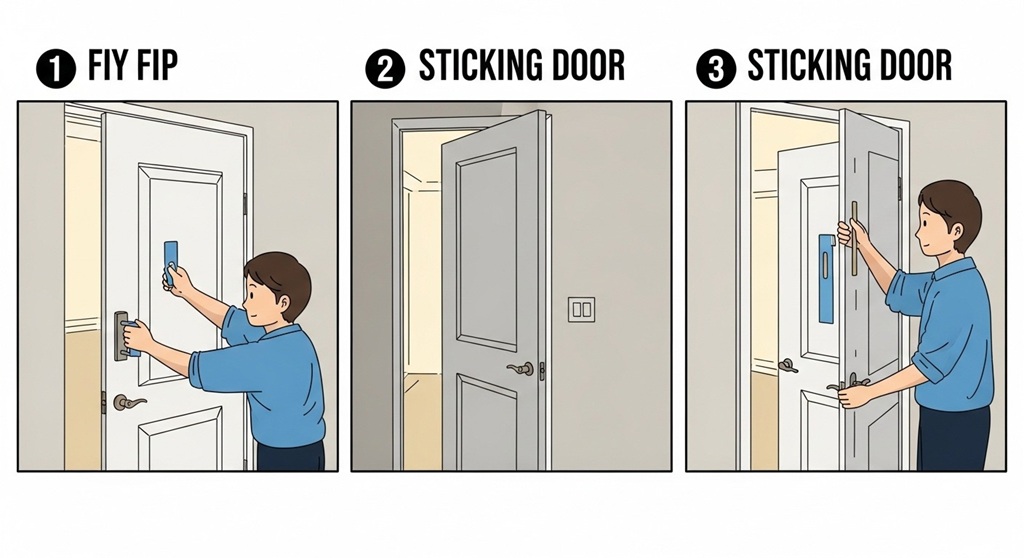
If the door sticks at the top corner, the problem is usually hinge sag.
This issue is common in interior doors that receive frequent use.
Fix method
- Tighten the top hinge screws
- Replace short screws with longer ones
- Check hinge alignment
If tightening does not solve the issue, try this adjustment trick:
- Remove the middle hinge pin
- Use pliers to slightly bend the hinge knuckle
- Reinstall the hinge pin
This adjustment shifts the door slightly away from the frame.
How Do You Fix a Door That Rubs on the Floor?
A door rubbing on the floor usually indicates hinge sag or floor height changes.
This often happens after new flooring installation.
Possible solutions
- Tighten hinges
- Install hinge shims
- Trim the bottom of the door
If trimming is required, follow these steps carefully.
How to trim the door bottom
- Mark the rubbing area with a pencil.
- Remove the door from hinges.
- Use a hand plane or power sander.
- Smooth the bottom edge.
- Reinstall the door.
Removing only a small amount of material ensures the door remains balanced.
How Do You Fix a Door That Won’t Latch?
If the door closes but will not latch, the strike plate is likely misaligned.
The latch must enter the strike plate hole correctly.
Quick fix steps
- Close the door slowly
- Observe where the latch hits the plate
- Loosen strike plate screws
- Adjust the plate position slightly
- Tighten screws again
If needed, enlarge the strike plate hole using a small file.
When Should You Sand or Plane the Door?
Sanding or planing should be the last option when hinge adjustments do not solve the sticking problem.
This method permanently removes material from the door edge.
Steps for sanding a sticking door
- Mark the rubbing area
- Remove the door
- Sand evenly along the edge
- Repaint or seal the exposed wood
Sealing the sanded area prevents moisture absorption and future expansion.
What Tools Are Needed to Fix a Sticking Door?
| Tool | Purpose |
|---|---|
| Screwdriver | Tighten hinge screws |
| Drill | Install longer screws |
| Sandpaper | Smooth door edges |
| Wood plane | Trim swollen door edges |
| Pencil | Mark rubbing points |
These tools are inexpensive and commonly found in home toolkits.
How Can You Prevent Interior Doors From Sticking?
Preventing door sticking involves controlling humidity and maintaining door hardware.
Small maintenance steps reduce the chances of alignment problems.
Prevention tips
- Keep indoor humidity between 30% and 50%
- Tighten hinge screws annually
- Avoid excessive paint buildup
- Check door alignment during seasonal changes
Home maintenance experts recommend inspecting door hardware once per year.
Conclusion: Fixing a Sticking Door Is a Simple DIY Repair
A sticking door may seem like a small annoyance, but it can quickly become a daily frustration. The good news is that most interior door problems have simple solutions. In many cases, tightening hinge screws or adjusting the strike plate fixes the issue in minutes.
Understanding the root cause is the key. Humidity expansion, loose hinges, and minor frame shifts are responsible for most sticking doors. Once you identify the problem area, the repair becomes straightforward.
By following the steps in this guide, you can restore smooth door movement without professional help. Regular maintenance also prevents the issue from returning.
Take a few minutes today to inspect your interior doors. Fixing a small alignment problem now can prevent larger repairs later. If you found this guide helpful, explore more practical home repair tutorials to keep your home running smoothly.
Frequently Asked Questions (FAQs)
How do you fix a sticking interior door quickly?
The quickest fix is tightening the hinge screws. Loose hinges cause door sagging, which leads to rubbing against the frame. Tightening or replacing the screws often solves the issue within minutes.
Why does my door stick more during humid weather?
Wood absorbs moisture from the air. During humid seasons, the door expands slightly. This expansion reduces the gap between the door and frame, causing friction.
Should I sand or plane a sticking door?
Sanding or planing should be the last solution. First try tightening hinges or adjusting the strike plate. If the door still sticks, sanding the rubbing edge removes excess material.
How much should I sand off a sticking door?
Remove only a small amount of material at a time. Typically 1–2 millimeters is enough to create proper clearance between the door and frame.
Can loose hinges cause a door to stick?
Yes. Loose hinges allow the door to sag downward. This shifts the door alignment and causes the top corner or latch side to rub against the frame.
How long does it take to fix a sticking door?
Most sticking door repairs take 10 to 30 minutes. Simple hinge tightening may solve the problem in less than five minutes.
Do interior doors stick because of house settling?
Yes. As homes settle over time, small structural shifts can change door frame alignment. This can cause doors to rub against the frame.
Read More Also: How to Choose the Perfect Cactus Centerpiece: A Prickly Delight for Your Table
Find out: How to Style a Dining Room Table