A single golden retriever can shed enough fur in a week to knit a second dog. In a studio apartment or a compact one-bedroom, that reality hits harder: hair migrates onto every surface, clogs tight corners, and seems to reappear minutes after vacuuming. The core problem in small spaces isn’t just shedding volume — it’s limited storage for tools, restricted floor space, and shared air that circulates hair everywhere. The solution is a layered routine: a fast daily reset, the right tools for your floor type, and smart placement of grooming and cleaning habits. To understand which equipment actually fits tight apartments and why the right vacuum matters so much, pet hair in small living spaces about compact options built for exactly this challenge.
Quick Answer
Control pet hair in a small space by combining four habits: brush your pet outside or in one designated spot, vacuum high-traffic zones every one to two days with a tool that reaches edges and upholstery, use a lint roller or damp rubber glove for quick touch-ups, and manage air with a HEPA filter. The key is a short, repeatable routine rather than one deep clean each week, because hair accumulates faster in small footprints.
Key Takeaways
- Daily five-minute resets beat one weekly deep clean in apartments, because hair redistributes quickly across a small area.
- A vacuum with a lift-away or handheld mode matters more than raw power in tight spaces — it lets you clean stairs, sofas, and corners without dragging a full unit around.
- Grooming frequency affects your floor more than any single cleaning product; brushing removes loose hair before it sheds indoors.
- HEPA filtration reduces airborne dander and fine hair, but it works best combined with surface cleaning, not as a replacement.
- Choose tools with slim profiles and wall storage, since bulky equipment you can’t store is equipment you won’t use.
Why Small Spaces Make Pet Hair Harder to Manage
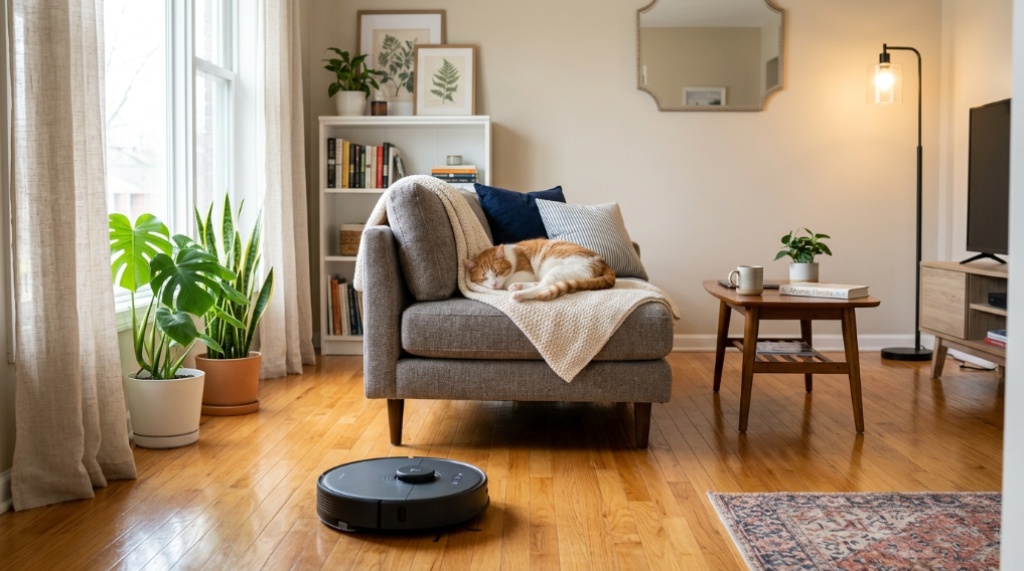
Small spaces concentrate hair. In a large home, shed fur has room to settle and go unnoticed. In 400 square feet, the same amount of hair ends up on the same limited surfaces, so it looks heavier and returns faster. Airflow also plays a role: with fewer rooms and often less ventilation, hair and dander recirculate between the sofa, bed, and floor.
Storage is the second hidden constraint. Many pet owners buy large upright vacuums or bulky grooming stations, then discover there’s nowhere to keep them. Equipment that lives in a closet you never open rarely gets used. That’s why compact, multi-purpose tools outperform bigger machines in apartments — not because they clean better in absolute terms, but because you’ll actually reach for them daily.
Build a Layered Routine Instead of a Single Cleaning Day
A layered routine means handling hair at multiple points before it spreads. Instead of reserving Saturday for cleaning, you interrupt accumulation throughout the week.
- Groom at the source. Brush your pet every one to two days, ideally outside, on a balcony, or over a washable mat in one spot. This removes loose fur before it lands on furniture.
- Reset high-traffic zones daily. A two-minute pass with a cordless vacuum or lint roller on the sofa, entryway, and bed keeps hair from building.
- Sweep or vacuum floors every one to two days. Hard floors show hair quickly; carpet traps it in fibers. Either way, frequent short passes prevent compaction.
- Deep clean weekly. Move lightweight furniture, clean under cushions, and vacuum edges and baseboards where hair collects.
The logic is simple: hair you remove early never becomes embedded hair. Embedded hair requires far more effort to extract, which is the opposite of what you want in a space with no room for a deep-cleaning marathon, For quick touch-ups between deep cleaning sessions, you might also find it helpful to check out this lightweight cordless vacuum for everyday cleaning in pennsylvania (pa).
Match Your Tools to Your Floors and Furniture
Floor type changes which tool works best. Using the wrong one wastes effort and can even damage surfaces.
| Floor or Surface | Effective Tool | Why It Works |
|---|---|---|
| Hardwood or tile | Microfiber mop or rubber broom | Rubber bristles grip hair instead of pushing it around |
| Low-pile carpet | Upright vacuum with brush roll | Agitates fibers to lift embedded hair |
| High-pile or shag rug | Vacuum with adjustable height | Prevents the brush from snagging long fibers |
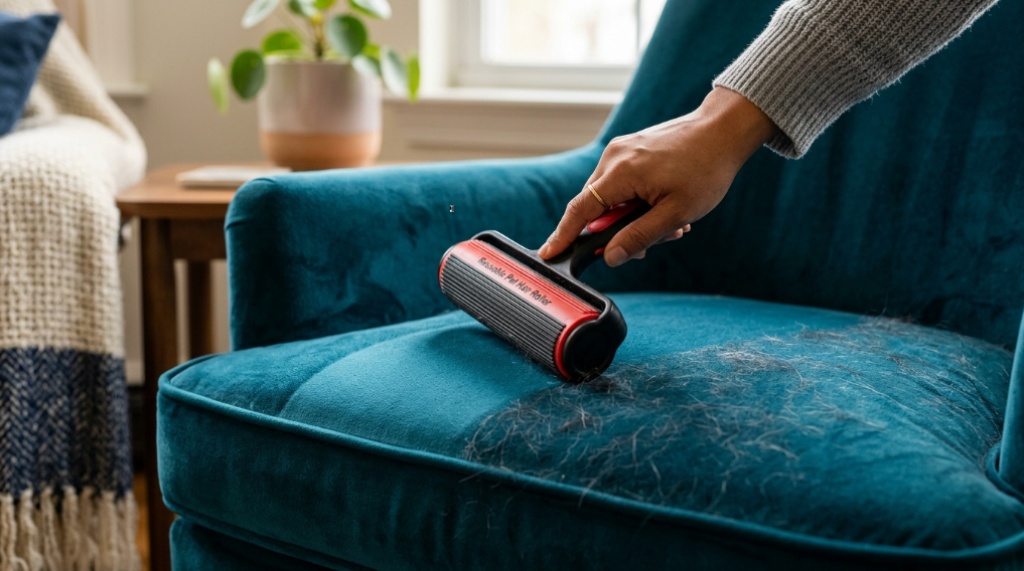
| Upholstery and sofas | Handheld or lift-away vacuum with crevice tool | Reaches seams and cushion gaps where hair hides |
| Bedding and blankets | Damp rubber glove or lint roller | Lifts surface hair without a full wash |
A single versatile vacuum often replaces three single-purpose tools in a small home, which saves both money and the closet space you don’t have. Prioritize models with a lift-away canister or a detachable handheld, since those let you transition from floor to couch to car without switching devices. For a closer look at compact options, read our related guide on choosing apartment-friendly vacuums for the specific features worth paying for.
Grooming Habits That Cut Indoor Shedding
Grooming is the highest-leverage habit because it removes hair before it becomes a cleaning problem. Frequency matters more than the tool’s price tag.
Short-haired pets benefit from a rubber curry brush, which lifts loose hair without scratching skin. Long-haired pets need a slicker brush plus a comb to prevent mats, which trap even more hair and require professional removal if ignored. Double-coated breeds shed seasonally and heavily, so increase brushing during shedding periods rather than waiting for the season to pass.
A common mistake is brushing indoors over carpet, which simply relocates the problem. Brushing outside, or over a hard floor you can sweep immediately, keeps the hair contained. If you must groom inside, place a washable mat or towel underneath and shake it out after each session.
Quick Daily Habits for Tight Apartments
You don’t need a full cleaning session to make a visible difference. These micro-habits take under five minutes combined:
- Keep a lint roller or damp rubber glove near the sofa for instant touch-ups.
- Designate one “hair zone” — a mat, bed, or chair — and clean it daily instead of chasing hair everywhere.
- Wipe hard floors with a microfiber cloth after meals, when foot traffic is highest.
- Shake out pet bedding and blankets outside weekly to remove trapped hair before washing.
- Vacuum entryways more often than other areas, since that’s where outdoor hair and dirt concentrate.
These habits work because they target where hair actually collects. Cleaning randomly wastes time; cleaning the hotspots consistently keeps the whole apartment livable.
Managing Airborne Hair and Dander
Surface cleaning handles visible hair, but fine particles stay suspended in the air and settle later. A HEPA filter — found in some vacuums and standalone air purifiers — captures very small particles that standard filters let pass through.
Place a purifier where your pet spends the most time, and keep it running continuously rather than in short bursts. Positioning matters more than size in a small apartment: a purifier in a corner behind furniture circulates less air than one placed in an open area. Combine filtration with regular surface cleaning, since a filter can’t remove hair already settled on the couch.
Storage and Space-Saving Strategies
The best tool is the one you can reach in seconds. In small spaces, that means prioritizing wall-mounted or slim-profile equipment and storing cleaning tools where you actually use them, not tucked in a distant closet.
Mount a cordless vacuum on a wall near the kitchen or entryway. Keep a lint roller in a drawer beside the sofa. Roll up washable mats instead of leaving them flat, so you can shake and store them easily. These small choices turn cleaning from a chore you postpone into a habit you complete without thinking.
Frequently Asked Questions
How often should I vacuum in a small apartment with a pet?
High-traffic areas benefit from vacuuming every one to two days, with a deeper weekly pass that includes under furniture and along edges. Small spaces accumulate visible hair faster, so shorter, more frequent sessions work better than one long weekly clean.
What actually removes pet hair from upholstery?
A vacuum with a crevice tool or a rubber-bristled brush works best, because it lifts hair from fabric fibers rather than pushing it around. A damp rubber glove is a fast alternative for touch-ups between full cleans.
Do air purifiers really help with pet hair?
They help with airborne dander and fine particles, not with visible hair already settled on surfaces. A HEPA filter reduces what stays suspended in the air, but it should support — not replace — regular surface cleaning.
Is it better to brush my pet indoors or outdoors?
Outdoors is better whenever possible, since it prevents loose hair from scattering inside. If you groom indoors, work over a washable mat or hard floor and clean up immediately afterward.
Can I manage heavy shedding without a powerful vacuum?
Yes, if you combine grooming, frequent short cleanings, and the right attachments. Power matters less than using the correct tool for each surface and cleaning often enough to prevent hair from embedding.
Conclusion
Managing pet hair in a small space comes down to consistency, not brute force. Groom your pet regularly, reset high-traffic zones daily, and use tools suited to your specific floors and furniture. Air filtration and smart storage support the routine but don’t replace it. Start with one small change — a daily two-minute sweep or a dedicated grooming spot — and build from there. Over a week, those small habits make far more difference than any single deep clean.