Key Takeaways
- Yes, most copper push fit fittings also work on plastic pipe like PEX and CPVC.
- Plastic pipe needs a pipe insert inside its end before joining.
- The insert stiffens the pipe wall so the seal and grip teeth work properly.
- Always use inserts made by the same brand as your fittings.
- Push fit fittings are perfect for joining copper and plastic pipe together.
When I finished my basement bathroom, the supply lines were a mix of everything. Old copper came down one wall. My new PEX lines ran along another. Connecting them felt like solving a puzzle with parts from two different boxes. A hardware store employee told me push fit fittings could join any of these pipes together. I honestly did not believe him, especially after reading plumbing failure warnings from https://accurehome.com/ about mixed-material transitions. How could one fitting seal smooth copper and flexible plastic equally well? Still, I bought two fittings, took them home, and pushed my first PEX connection together.
It leaked. Not a flood, just an annoying drip. The problem? I had skipped a small plastic piece called a pipe insert. Once I added it, the joint sealed perfectly. That connection has stayed dry for three years now.
That small lesson taught me how push fit fittings really work. In this guide, I will explain exactly how copper push fit fittings interact with plastic pipe. You will learn about inserts, sizing, and the mistakes that cause leaks. Let’s get started.
Can You Use Copper Push Fit on Plastic Pipe?
Yes, you can use push fit fittings designed for copper on most plastic plumbing pipes. Brands like SharkBite and JG Speedfit build their fittings as universal connectors. Therefore, one fitting works on copper, PEX, CPVC, and PE-RT pipe alike.
This universality is the whole appeal of push fit technology. Inside every fitting, the same three parts do the work. A rubber O-ring seals around the pipe wall. Stainless steel teeth grip the pipe’s outer surface. A collet holds everything locked under pressure. These parts seal copper and plastic equally well.
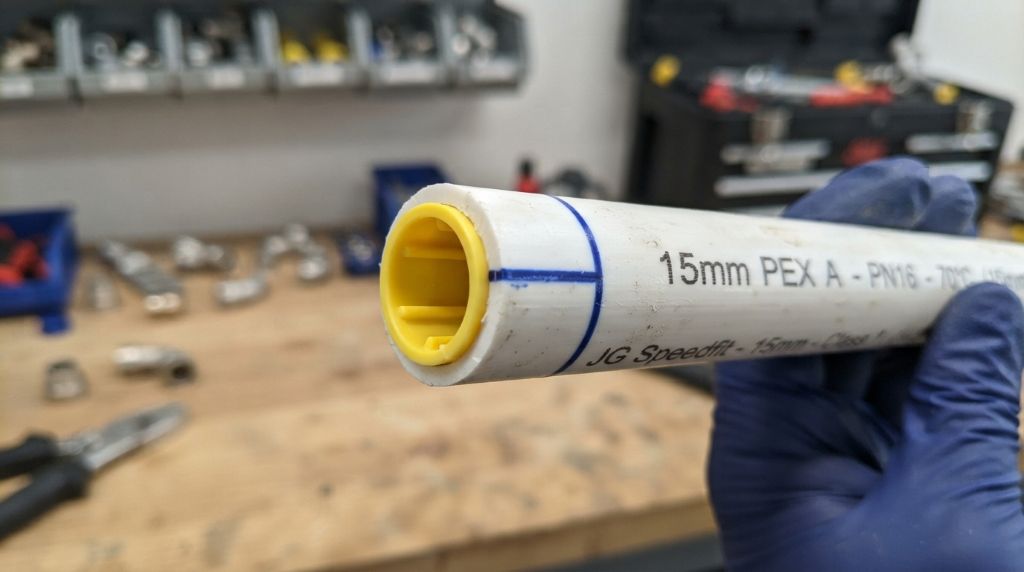
However, plastic pipe needs one extra step that copper does not. You must slide a pipe insert into the end of the plastic pipe first. This small plastic or metal tube stiffens the pipe wall. Without it, the soft plastic can flex, collapse, or slip out of the grip teeth over time.
Here is what makes push fit fittings so versatile:
- One fitting type works across multiple pipe materials.
- No glue, solvent, or special primers needed for any pipe.
- Connections join copper to plastic in a single fitting.
- Removable with a disconnect clip if plans change.
- Certified for the same pressure ratings on all approved pipes.
Sizing deserves a quick mention here. In the United States, PEX pipe uses the same outside diameter as copper tube. Therefore, standard fittings fit both materials identically. However, always confirm your pipe matches the fitting size printed on the package. The SharkBite website lists every approved pipe type and size for each fitting they sell.
One caution applies across all brands. Do not assume every push fit is universal. A few budget brands make fittings for specific pipes only. Therefore, read the package details before buying. The few seconds spent checking prevents a slow leak later.
Why Plastic Pipe Needs a Pipe Insert
The pipe insert is the small detail that separates success from drips. Understanding why it matters helps you never skip it again.
Plastic pipe is flexible by design. That flexibility makes it easy to route around joists and corners. However, flexibility becomes a weakness at connection points. Push fit fittings rely on a firm, round pipe surface. The O-ring needs even pressure to seal, and the teeth need a rigid wall to bite.
Without an insert, three problems can develop. First, the plastic pipe can compress slightly under the grip teeth. Over months, the grip loosens, and the pipe may push out under pressure. Second, the soft wall can distort, which breaks the O-ring’s even seal. Third, thermal movement makes plastic pipe expand and contract constantly. That movement slowly works a loose pipe free.
Here is what a pipe insert actually does:
- Stiffens the pipe end so the teeth grip firmly.
- Keeps the pipe perfectly round for the O-ring seal.
- Prevents the pipe from collapsing during insertion.
- Resists long-term pull-out from pressure and movement.
- Maintains full water flow through the joint.
Now, here is where I went wrong on my basement project. My PEX line needed inserts, and my fitting package mentioned them in tiny print. I pushed the bare plastic pipe in and trusted the teeth. The joint held for a day, then started weeping. Adding the correct insert took two minutes and solved it permanently.
Insert types vary by brand and region. Some inserts are simple plastic tubes. Others are brass and include a grip ring. Additionally, some brands require their specific insert design for warranty coverage. Therefore, always match the insert to your fitting brand. A generic insert from another brand may fit poorly and cause exactly the leak you are trying to avoid.
How to Connect Push Fit Fittings to Plastic Pipe
Connecting plastic pipe with push fit fittings takes only minutes. The insert step is the main difference from copper. Follow this process, and your joints will hold for decades.
- Shut off the water and drain the line fully.
- Cut the plastic pipe square using proper pipe cutters.
- Check the cut end for burrs and remove any rough edges.
- Confirm the pipe end is round and undamaged.
- Mark the insertion depth on the pipe with a pencil.
- Push the correct pipe insert fully into the pipe end.
- Push the pipe straight into the fitting until it reaches the depth mark.
- Pull gently on the pipe to confirm the joint is locked.
- Turn the water on slowly and inspect the connection.
The depth mark matters even more with plastic. Flexible pipe can appear inserted while actually sitting short of the seal. For example, a half-inch fitting typically needs about an inch of pipe inserted. Marking the pipe removes all guesswork.
Cutting technique matters with plastic too. Use a ratchet cutter or sharp scissors made for plastic pipe. A crushed or oval cut end will not seat the insert properly. Therefore, replace dull blades before starting your project.
Temperature also plays a role. Plastic pipe stiffens in cold conditions and becomes harder to insert. If you work in a cold garage, warm the pipe ends slightly in your hands first. Never use a flame or heat gun, because overheating damages the pipe permanently.
Finally, support the pipe runs properly. Plastic pipe needs clips every couple of feet, closer than copper does. Good support keeps movement away from your joints. This one habit dramatically extends the life of every connection.
Joining Copper and Plastic Pipe Together
One of the best features of push fit fittings is mixed-material joining. Many older homes have copper in some areas and newer plastic elsewhere. Traditionally, connecting these materials meant adapters and multiple fittings. Push fit solves this with a single joint.
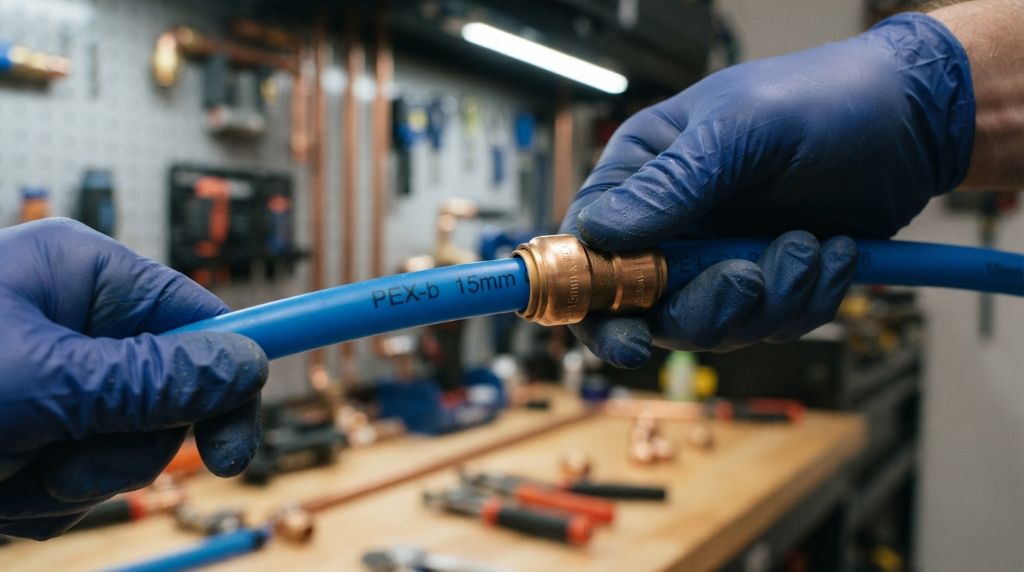
A standard push fit coupling accepts copper on one side and plastic on the other. You simply prepare each pipe end for its material. The copper end gets cleaned and deburred as usual. The plastic end gets an insert and a depth mark. Then both sides push into the same fitting.
Here are common mixed-material situations:
- Replacing a damaged copper section with PEX.
- Adding plastic lines to an existing copper system.
- Converting old galvanized or copper runs during renovations.
- Connecting plastic appliance lines to copper supplies.
- Repairing a burst section without replacing the whole run.
This flexibility saved me hundreds of dollars in my basement. Instead of replacing all the copper, I bridged old and new with two couplings. The entire connection took twenty minutes.
However, one consideration applies to mixing materials in heating systems. Copper and plastic expand at different rates with temperature changes. On hot water lines, leave slight slack in plastic runs. This allows movement without stressing the joints. Additionally, support both materials according to their own requirements rather than treating them the same.
Corrosion is another old concern that push fit largely eliminates. Direct copper-to-steel contact causes galvanic corrosion. However, copper to plastic creates no such reaction. Therefore, mixing these two materials through push fit fittings is completely safe long term.
Common Mistakes to Avoid With Plastic Pipe Connections
Plastic pipe forgives less than copper at connection points. Avoid these common errors, and your push fit joints will stay dry for good.
Skipping the insert is mistake number one, and my own story proves it. The joint may hold initially, but failure often arrives weeks later. Therefore, treat the insert as part of the pipe, not an optional extra.
Watch for these other frequent errors:
- Using an insert from a different brand than the fitting.
- Cutting plastic pipe with dull blades, leaving crushed ends.
- Forgetting the depth mark on flexible pipe.
- Pushing pipe in at an angle, which damages the O-ring.
- Over-bending plastic pipe close to the fitting.
- Ignoring pipe clips, which lets movement stress the joints.
Insert orientation is a subtle trap with certain brands. Some inserts include an internal lip that must face the fitting. Installing one backward prevents full insertion. Therefore, check the manufacturer’s diagram before pushing the insert in.
Mixing brands is another quiet risk. Grip teeth and insert designs vary between manufacturers. A Speedfit insert inside a SharkBite fitting may seat incorrectly. Stick with one brand across every fitting and insert in your project. The small price difference is trivial compared to a hidden leak.
Finally, always leak-test before closing anything up. Run water at full pressure and inspect each joint. Then dry the connections and check again after fifteen minutes. Slow weeps reveal themselves only after pressure sits on the seal. My basement insert leak appeared exactly this way, one day after the water was back on.
Conclusion
So, can you use copper push fit on plastic pipe? Yes, and the results are excellent when done right. These universal fittings connect copper, PEX, CPVC, and more with one simple product. The only extra step is sliding the correct pipe insert into the plastic pipe first. For a better understanding of how different plumbing components work together, you can also explore how plumbing pipe works: unveiling the intricacies.
My basement lesson cost me one drip and two minutes of rework. Yours can cost nothing. Choose the right insert for your fitting brand, mark your depths, and support the pipe runs properly. Follow those rules, and mixed-material plumbing becomes one of the easiest jobs in your home.
Have you joined plastic pipe with push fit fittings? Did the insert step trip you up too, or did you learn another lesson? Share your story in the comments below. Additionally, if this guide helped you, share it with a friend staring at a pile of mixed pipes. The right connection is only a push away!
Frequently Asked Questions
Do all push fit fittings work on plastic pipe?
Most major brands work on PEX, CPVC, and PE-RT. However, always check the package, because a few fittings are material specific.
Do I need a pipe insert for plastic pipe?
Yes. Plastic pipe is flexible and needs the insert for the grip teeth to hold and the O-ring to seal properly.
Do plastic pipe inserts work in both ends of a fitting?
No. Only the plastic pipe side needs an insert. Copper pipe ends stay bare for insertion.
Can I use one brand’s insert in another brand’s fitting?
It is not recommended. Insert designs differ between brands, so always match the insert to your fitting brand.
Can push fit fittings connect copper to plastic pipe?
Yes. A single push fit coupling can join copper on one side and plastic on the other, which is their biggest advantage.