Having your kitchen taken out of action for a week or so to have it refitted is not as awful as you might think. It’s just a case of planning ahead and knowing what to expect.
Set Up A Temporary Kitchen First
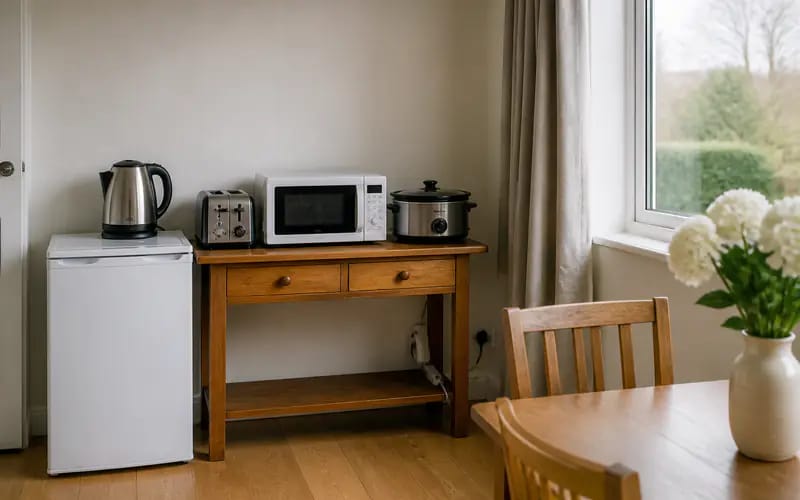
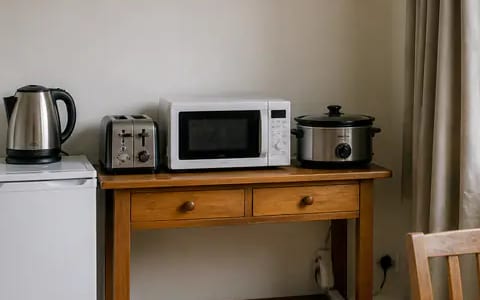
Set up a temporary kitchen in another room before the first tool is moved. Clear the necessary area of all appliances. Set up a number of kettles, microwaves, toasters and a small fridge in the temporary kitchen. Leave a slow cooker to cook whilst you are out during the day. Clear the space the night before and connect up any extension leads needed.
Agree Working Hours In Writing
Get these agreed with your fitters in writing. Confirm their working hours, access requirements through your front door and whether anyone will be coming and going throughout the day for deliveries. You can then plan around school collection times, work calls etc. If your contractors don’t stick to these agreed hours then refer back to your written confirmation and ask them to explain.
Seal The Doorway Against Dust
Many people underestimate how far dust from cutting, sanding and even old plaster can travel round a house. To stop this getting into other parts of your home a temporary dust barrier or zip wall can be put up round the doorway into the kitchen before start date. Also ensure that all air vents and other open hatches near to the work area are closed up while work is in progress as dust will travel through smallest of gaps.
Keep Services Connected As Long As Possible
It’s often beneficial to ask your contractor to do your first-fix work (wiring, plumbing and heating etc) before the room is closed up. This means that your water and electricity can remain connected for as long as possible. In many kitchens the water and electricity are only switched off a few days before completion when the old pipes and wires are taken out and new ones put in place. There is more on Kitchen Refurbishment at The Kitchen Refurbishment Company.
Plan A Simple Meal Rota
Come up with a meal plan for the period of time your kitchen is going to be out of action. Slow-cooked meals that can be left to cook while you’re out are a great option. And make sure you have a few barbecues or takeaways thrown in there for good measure. Having a few meals frozen before the kitchen is dismantled is also a good idea to be prepared for the unexpected.
Keep Children And Pets Out Of The Zone
When the fitters are in your house try to treat your kitchen area as an out-of-bounds area.Loose wiring, sharp off-cuts and exposed pipework can be a real hazard to toddlers and cats alike. Also beware of dust and vibration from drilling etc. travelling to other rooms in your house and try to move breakable, valuable and sentimental items to rooms that are not near the work area.
Do A Daily Walk-Round
Make time to carry out a daily inspection around the kitchen with your lead contractor to highlight any problems that may have arisen during the day. Some things may appear to be perfect but on closer inspection reveal themselves to be less than ideal – for example a socket placed in the wrong position or a tile not quite straight. Such problems are easily rectified before work is complete and left exposed.
Warn Neighbours About Deliveries And Skips
Delivery times, work being done at anti-social hours and heavy plant causing obstructing roadways can all cause concern with nearby residents. The majority of contractors adhere to a recognised code of practice for limiting noise etc. It’s only fair to ask your contractor if they comply with such standards prior to commencement of work.
Sort all this out before the first van turns up and the rest of the job will be far easier for you and everyone around you.