
Getting a good night of sleep is important for your health. However, many people wake up with neck pain or backaches and never figure out why. For stomach sleepers, the problem is often hiding in plain sight. It is the pillow.
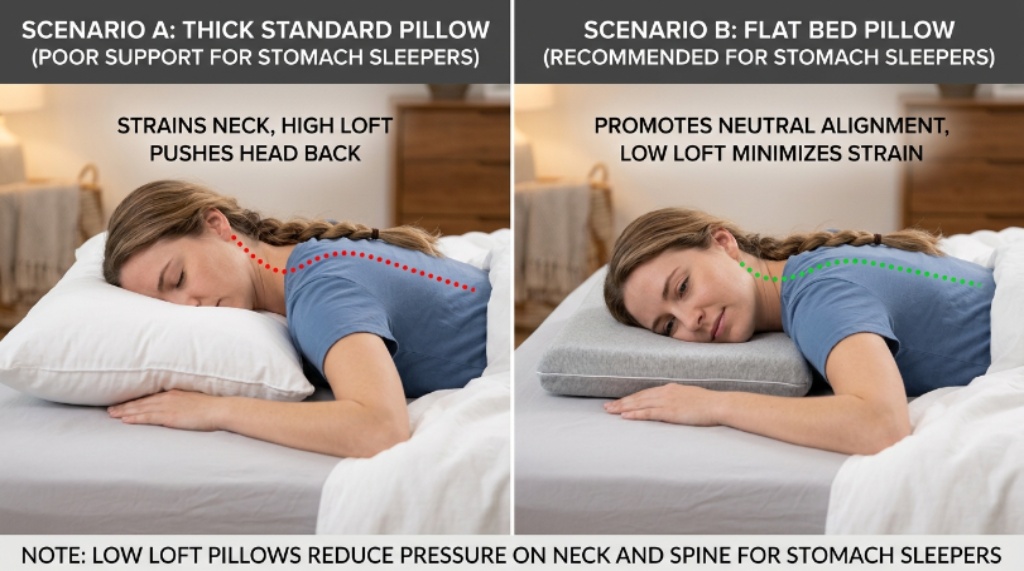
Most standard pillows are too thick for people who sleep on their stomachs. They push the head upward at an unnatural angle. Over time, this strains the neck and spine. The simple solution is to switch to a pillow with a lower height. Slim pillows and low height pillows are designed with stomach sleepers in mind. They offer support without forcing your head and neck out of alignment.
In this article, you will learn why pillow height matters, how flat bed pillows help stomach sleepers, and what to look for when choosing the right one.
Understanding the Stomach Sleeping Position
Stomach sleeping is one of the least recommended positions by sleep experts. Still, many people find it the most comfortable way to drift off. About 7 to 16 percent of adults sleep on their stomachs regularly.
When you lie face down, your spine naturally flattens out. This can actually reduce snoring for some people. However, it also means your neck has to rotate to one side so you can breathe. If your pillow is too high, this rotation becomes more extreme. Therefore, the head gets pushed into an awkward tilt that strains the cervical spine.
Additionally, a thick pillow pushes the lower back into a curved position. This increases pressure on the lumbar region. Many stomach sleepers experience lower back pain without ever connecting it to their pillow choice.
Why Pillow Height Is the Key Factor
Pillow height, also called loft, refers to how tall a pillow is when you rest your head on it. For back and side sleepers, a medium to high loft works well. For stomach sleepers, however, the opposite is true.
A lower pillow keeps your head closer to the mattress surface. This reduces the angle at which your neck turns. Therefore, your spine stays closer to a neutral position throughout the night. A neutral spine means less tension on muscles, nerves, and joints.
Some stomach sleepers even prefer no pillow at all. However, a very thin pillow still offers a small layer of cushioning for the face and forehead. It prevents direct pressure on delicate facial skin and can reduce the chance of waking up with lines or creases.
The Health Benefits of Using a Low Profile Pillow
Reduced Neck and Shoulder Pain
One of the most noticeable benefits of switching to a flatter pillow is waking up without neck stiffness. When your neck stays in a more natural position during sleep, the muscles do not have to work as hard. They can relax fully. Over time, this leads to less soreness in the mornings and fewer headaches caused by muscle tension.
Better Spinal Alignment
Spinal alignment is crucial for long-term back health. A pillow that is too thick pushes the neck upward and curves the lower back in an unhealthy way. A low profile pillow reduces this effect. Additionally, pairing a flat pillow with a thin pillow placed under the pelvis can further support a neutral spine for stomach sleepers.
Improved Breathing and Airflow
A very thick pillow can restrict airflow when you sleep face down. This is because it forces the face into an angle that may partially block the nose or mouth. A flatter pillow allows for more natural head placement. Therefore, breathing tends to be easier and more consistent through the night.
What to Look for in a Pillow for Stomach Sleepers
Not all flat bed pillows are the same. When shopping for one, there are a few key features to consider.
- Loft height: Look for a pillow with a loft of 2 to 3 inches. This range is generally ideal for stomach sleepers.
- Fill material: Memory foam, down, and down alternatives all come in low loft versions. Memory foam provides consistent support, while down is softer and more compressible.
- Firmness: A soft to medium firmness works best. A firm pillow, even at a low height, can still create pressure on the face and neck.
- Cover material: A breathable, soft cover helps prevent overheating and skin irritation during the night.
- Washability: Look for a pillow that is easy to clean. Stomach sleepers have their faces close to the pillow surface, so hygiene matters.
Common Mistakes Stomach Sleepers Make with Pillows
Many stomach sleepers make the mistake of using the same pillow as back or side sleepers. This is one of the main reasons they wake up feeling stiff or sore. Additionally, some people stack two pillows, thinking more cushioning equals more comfort. However, for stomach sleepers, this only makes alignment problems worse.
Another common mistake is ignoring the pillow under the body. Placing a thin pillow under the lower abdomen or hips can make a significant difference. It reduces the arch in the lower back and supports the pelvis. Combined with a low loft head pillow, this approach greatly improves comfort and spinal health.
Transitioning to a Lower Pillow: What to Expect
Switching to a flatter pillow can feel strange at first. Your body has adapted to a certain height. Therefore, you may feel slight discomfort in the first few nights. This is completely normal and usually fades within a week.
Start by using the low profile pillow for naps or short sleep periods. Gradually increase the amount of time you use it. Most people find that after the adjustment period, they sleep more soundly and wake up with less pain.
If you still feel discomfort after two weeks, it may be worth consulting a physical therapist or sleep specialist. They can offer personalized advice based on your body type and sleep habits.
Are Low Profile Pillows Good for Other Sleep Positions?
Low height pillows are primarily designed with stomach sleepers in mind. However, some back sleepers also benefit from a lower loft, especially those with a naturally flat cervical curve. Side sleepers, on the other hand, generally need a higher pillow to fill the gap between the shoulder and ear.
If you switch positions during the night, you may find a low profile pillow less comfortable when you roll onto your side. In that case, consider keeping two pillows nearby. Use the flat one when stomach sleeping and a thicker one when on your side.
Conclusion
Choosing the right pillow is one of the simplest changes you can make for better sleep health. For stomach sleepers, a pillow with a low loft is not just a preference. It is a necessity for maintaining proper spinal alignment and reducing pain.
Slim pillows keep the head and neck closer to a neutral position. They reduce strain on muscles and joints throughout the night. Additionally, they improve airflow and prevent the discomfort that comes from sleeping with a forced head tilt.
If you are a stomach sleeper dealing with morning soreness, try switching to a flat bed pillow. Pair it with a thin support pillow under your pelvis for even better results. The transition may take a few nights, but the long-term benefits are well worth it. Your neck, back, and overall sleep quality will thank you.
Frequently Asked Questions
1. What is the ideal pillow height for stomach sleepers?
The ideal pillow height for stomach sleepers is between 2 and 3 inches. This low loft keeps the neck in a more neutral position and reduces the strain that comes with sleeping face down on a thick pillow.
2. Can stomach sleepers sleep without a pillow?
Yes, some stomach sleepers find that sleeping without a pillow is the most comfortable option. However, a very thin pillow still provides a bit of cushioning for the face and can prevent pressure marks on the skin. It is worth experimenting to find what works best for you.
3. Are memory foam low profile pillows good for stomach sleepers?
Yes, memory foam low profile pillows can be a great choice. They conform to the shape of your head and neck while maintaining a consistent low loft. However, make sure the pillow is soft to medium in firmness. A firm memory foam pillow can still create pressure even at a low height.
4. Will switching to a flat pillow help with neck pain?
For stomach sleepers, yes. A high pillow forces the neck into an extreme tilt. Switching to a low height pillow can reduce this tilt and relieve the muscle tension that causes neck pain. Most people notice an improvement within one to two weeks of making the switch.
5. How do I know if my pillow is too thick?
If you wake up regularly with neck stiffness, shoulder aches, or headaches, your pillow may be too thick. Another sign is feeling like your head is tilted at an uncomfortable angle when you first lie down. Try placing your hand under your pillow and pressing it down. If it still lifts your head significantly, it is probably time to switch to a flatter option.