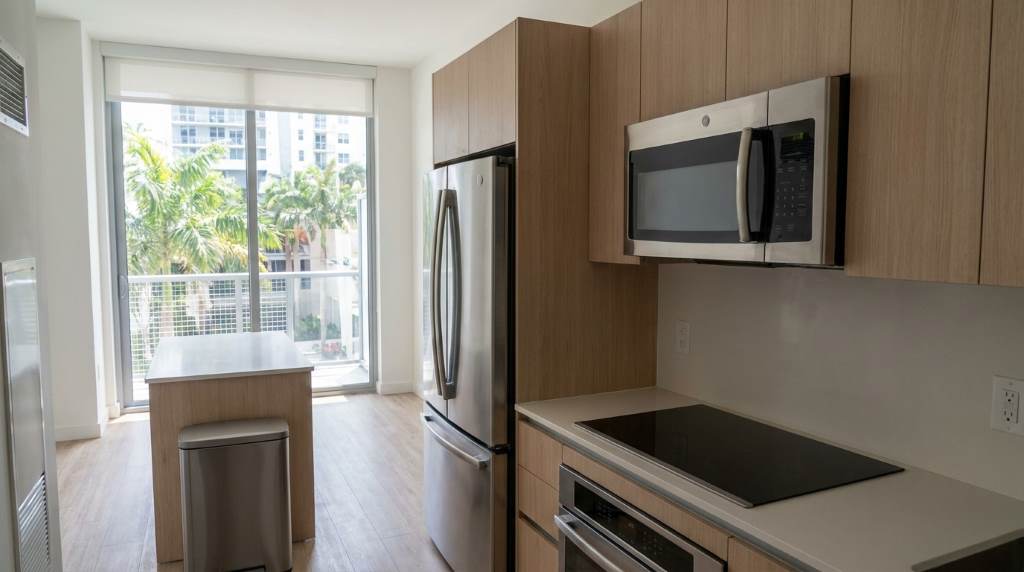
Small apartments in Miami continue to shape modern kitchen design trends across Florida. According to recent housing reports, more than 60% of new urban apartments now focus on compact layouts with efficient storage solutions. At the same time, homeowners want kitchens that feel polished, balanced, and visually larger than they really are. That demand explains why appliance alignment has become a major interior design priority. Many renters also search for dishwasher spacing ideas for cabinets because uneven appliance gaps quickly make a small kitchen look cluttered and cramped.
Miami apartments often feature sleek kitchens with narrow footprints and open-concept living areas. Designers therefore use alignment techniques to create a seamless visual flow between cabinets and appliances. Proper spacing, consistent finishes, and hidden transitions help compact kitchens appear more expensive and organized. Furthermore, the humid coastal climate in Miami affects material choices and appliance placement decisions. As a result, apartment kitchens in the city have developed a very distinct design style.
Why Appliance Alignment Matters in Small Miami Kitchens
Kitchen alignment directly impacts how spacious a room feels inside a small apartment. When refrigerators, ovens, and dishwashers line up evenly, the eye moves naturally across the room without interruption. This effect creates a cleaner and more luxurious appearance even in limited square footage. In contrast, uneven cabinet heights or protruding appliances can instantly make the kitchen feel crowded. Consequently, alignment has become one of the most important details in modern apartment remodeling.
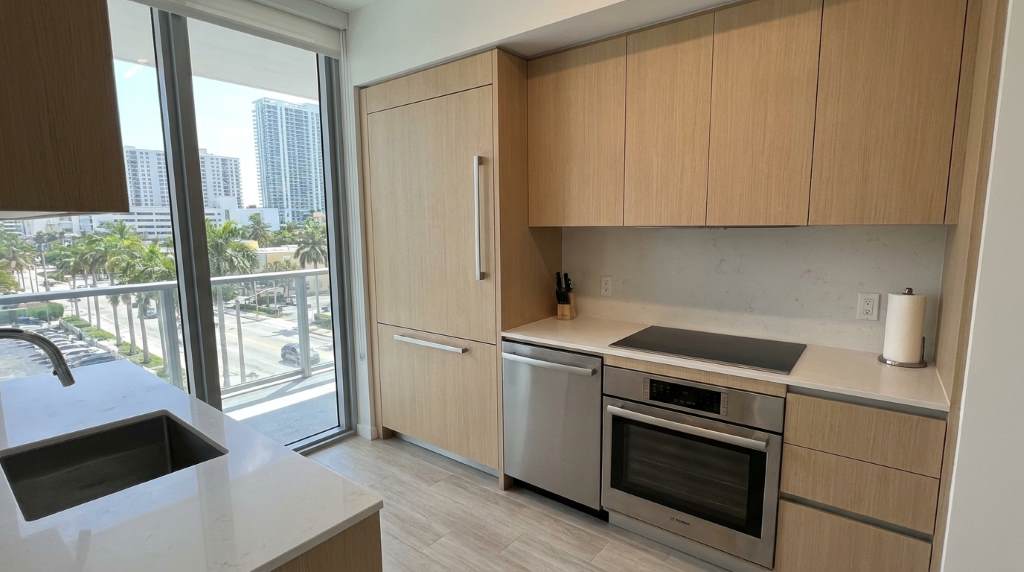
Miami homeowners also understand that buyers notice kitchen symmetry during property tours. A well-aligned kitchen gives the impression of thoughtful planning and higher construction quality. Moreover, real estate professionals often highlight sleek kitchens in listing photos because visual balance increases perceived value. Many designers now discuss how kitchen renovation add value through layout optimization and appliance integration. This strategy works especially well in compact Miami condos where every inch matters.
Built-In Appliances Create a Seamless Look
Built-in appliances have become extremely popular in Miami apartment kitchens over the past few years. These appliances fit flush with cabinetry and remove the uneven lines caused by freestanding units. As a result, kitchens appear wider and visually calmer even in very tight spaces. Panel-ready dishwashers and integrated refrigerators especially contribute to this smooth appearance. Additionally, they allow designers to maintain one consistent cabinet finish throughout the room.
Many apartment developers in Miami now design kitchens around appliance dimensions before cabinets are installed. This planning method prevents awkward gaps and misaligned corners later in the project. Designers also prefer slimmer appliance models because they leave enough clearance for airflow and movement. Furthermore, smaller appliances often reduce visual bulk in studio apartments or one-bedroom layouts. Therefore, compact kitchens can still look sophisticated without sacrificing functionality.
Benefits of Built-In Appliances
- Create a cleaner visual line across the kitchen
- Reduce bulky shadows and uneven spacing
- Improve storage opportunities in tight layouts
- Help small kitchens appear larger and brighter
- Support modern minimalist interior styles
Cabinet Color Coordination Improves Visual Alignment
Color consistency plays a major role in making appliances look perfectly aligned. Miami apartment kitchens often use white, light gray, beige, or soft wood finishes because these tones reflect sunlight well. When cabinets and appliances share similar shades, the boundaries between them become less noticeable. Consequently, the entire kitchen appears more connected and proportional. Designers frequently use matte finishes because they reduce glare from Miami’s intense natural light.
Many modern kitchens also pair appliance placement with ventilation planning and island positioning. This combination helps maintain visual balance across compact layouts without overcrowding the room. Designers increasingly recommend best island hood choices that match cabinet symmetry and appliance proportions. Proper hood sizing prevents the cooking area from overpowering the kitchen visually. Therefore, every element works together to support alignment and flow.
Miami’s Coastal Climate Influences Kitchen Layout Decisions
Humidity affects more than comfort levels in Miami apartments because it also influences kitchen design choices. Coastal moisture can expand certain cabinet materials and create slight spacing inconsistencies over time. Designers therefore prefer moisture-resistant materials like marine-grade plywood and laminate finishes. These materials maintain straight lines and reduce warping around appliances. As a result, kitchens stay visually aligned for much longer.
Ventilation also matters greatly in Miami kitchens because trapped moisture damages cabinets and wall finishes. Many apartments include stronger exhaust systems to control humidity during cooking. Furthermore, proper airflow prevents swelling around appliance edges and cabinet doors. This attention to detail keeps alignment consistent throughout seasonal weather changes. Consequently, Miami kitchens often age better than poorly ventilated compact kitchens in other cities.
Countertop Design Helps Appliances Blend Naturally
Countertops can visually connect appliances with surrounding cabinetry when selected carefully. Quartz countertops remain highly popular in Miami because they resist humidity and maintain clean edges over time. Designers often extend countertop lines across multiple appliances to create uninterrupted visual movement. This technique minimizes the appearance of separate appliance sections. Therefore, even a small kitchen feels more organized and professionally designed.
Waterfall countertops also contribute to appliance alignment in luxury Miami apartments. The continuous edge draws attention downward and creates stronger geometric balance in compact spaces. Additionally, subtle countertop veining can soften appliance transitions without overwhelming the room visually. Designers usually avoid busy patterns because they make small kitchens feel chaotic. Instead, they prioritize smooth textures and simple finishes for a cleaner appearance.
Popular Countertop Choices in Miami Apartments
- White quartz with soft gray veining
- Light concrete-look surfaces
- Warm beige engineered stone
- Matte solid surfaces with minimal patterns
- Humidity-resistant porcelain slabs
Lighting Tricks Make Appliance Lines Look Cleaner
Lighting placement strongly influences how aligned kitchen appliances appear inside small apartments. Under-cabinet lighting helps eliminate shadows between appliances and surrounding cabinetry. Consequently, the kitchen feels smoother and more visually balanced during both daytime and evening hours. Miami apartments also benefit from large windows that increase natural brightness throughout the kitchen. This combination creates a cleaner and more open atmosphere.
Designers often install warm LED strips because harsh white lighting exaggerates spacing imperfections. Soft lighting instead highlights clean cabinet edges and reflective appliance surfaces more naturally. Additionally, ceiling lights placed directly above work zones improve symmetry across the kitchen layout. Pendant lights over islands also create visual anchors that reinforce alignment. Therefore, lighting serves both functional and aesthetic purposes in compact kitchens.
The Hidden Role of Flooring in Appliance Alignment
Flooring surprisingly affects appliance positioning more than many homeowners realize. Uneven floors can cause refrigerators or dishwashers to tilt slightly, which disrupts visual balance immediately. Miami apartments therefore commonly use large-format tiles because they provide smoother installation surfaces. These tiles also create fewer grout interruptions across the floor. As a result, kitchens appear more spacious and cohesive.
Continuous flooring between kitchen and living areas also strengthens the illusion of alignment. Open-concept apartments especially benefit from uninterrupted surfaces because the eye travels farther without visual breaks. Furthermore, neutral floor tones prevent appliances from appearing disconnected from the rest of the apartment. Designers usually avoid highly contrasting floors in small kitchens for this reason. Instead, they focus on soft continuity and subtle texture.
Minimalist Hardware Keeps Kitchens Visually Balanced
Cabinet hardware may seem like a small detail, but it significantly affects appliance alignment. Oversized handles or mixed metal finishes can disrupt the clean lines designers try to achieve. Therefore, Miami apartment kitchens often feature slim pulls or handle-free cabinet systems. This minimalist approach supports a sleek and uninterrupted visual flow. Consequently, appliances blend more naturally into the overall kitchen design.
Many designers also coordinate hardware finishes with appliance trims for consistency. Stainless steel, brushed nickel, and matte black remain the most common combinations in Miami apartments. Furthermore, matching finishes create subtle repetition that strengthens symmetry throughout the room. Small visual repetitions help compact kitchens feel intentional instead of crowded. Therefore, hardware selection matters just as much as appliance placement.
An Uncommon Design Strategy Used in Miami Apartments
One rarely discussed strategy in Miami apartments involves using ceiling lines to guide appliance alignment visually. Designers intentionally position upper cabinets and lighting tracks to mirror appliance edges below. This technique creates an invisible grid that makes the entire kitchen feel structured and harmonious. Although most homeowners never notice it directly, the effect strongly influences spatial perception. Consequently, kitchens appear more polished without major renovations.
Another uncommon approach involves reflective side panels near refrigerators or tall pantry units. These reflective surfaces subtly bounce light and soften harsh appliance edges in compact kitchens. Designers especially use this method in apartments with limited natural sunlight. Additionally, mirrored or satin-finish panels can visually extend narrow kitchen walls. Therefore, alignment feels more fluid and less boxy in small layouts.
How Smart Storage Supports Better Appliance Placement
Storage planning directly affects appliance alignment because clutter quickly destroys visual balance. Miami apartment kitchens often include pull-out pantry systems and hidden drawer organizers to reduce countertop mess. This organization keeps appliances as the primary visual focus instead of surrounding clutter. Furthermore, clean surfaces strengthen the sleek and modern appearance homeowners want. Therefore, storage design becomes essential for maintaining alignment.
Many compact kitchens now include vertical storage solutions that free up horizontal space around appliances. Wall-mounted racks, hidden shelves, and toe-kick drawers improve efficiency without crowding the room visually. Additionally, organized kitchens allow appliance doors to open fully without obstruction. This practical detail improves both function and appearance. Consequently, small kitchens feel more comfortable and professionally planned.
Future Kitchen Trends in Miami Apartments
Future Miami apartment kitchens will likely focus even more on concealed appliances and modular layouts. Designers already experiment with hidden induction cooktops and retractable ventilation systems. These innovations create cleaner surfaces and improve spatial flexibility in compact homes. Furthermore, smart appliances now feature slimmer profiles designed specifically for urban apartments. As a result, appliance alignment will continue evolving alongside modern technology.
Cabinet trends will also shift toward flatter finishes and simpler geometric forms in the coming years. Homeowners increasingly avoid overly decorative cabinet styles because they interrupt visual consistency. Many experts already discuss why kitchen cabinet style outdated trends no longer work well in compact urban kitchens. Instead, smooth surfaces and hidden storage solutions now dominate apartment design. Consequently, appliance alignment will become even more seamless in future renovations.
Conclusion
Small apartments in Miami, FL continue proving that limited square footage does not prevent beautiful kitchen design. Through careful appliance alignment, strategic lighting, climate-conscious materials, and smart storage, compact kitchens can feel elegant and spacious. Homeowners who focus on symmetry and clean visual flow often achieve the most impressive transformations. Furthermore, these upgrades improve both comfort and property value in competitive urban markets. If you plan to redesign your kitchen, start by evaluating how appliance placement affects the room’s balance and overall appearance.
FAQs
Why do aligned appliances make kitchens look bigger?
Aligned appliances create smoother visual lines that reduce clutter and improve spatial flow.
What appliance finish works best in small Miami apartments?
Matte or stainless steel finishes work best because they reflect light without overwhelming the space.
Are built-in appliances worth the investment?
Yes, built-in appliances improve aesthetics, save space, and increase perceived home value.
How does Miami humidity affect kitchen cabinets?
High humidity can cause cabinet swelling, so moisture-resistant materials are strongly recommended.
What cabinet colors help appliances blend better?
White, beige, light gray, and soft wood tones help appliances appear more integrated and balanced.