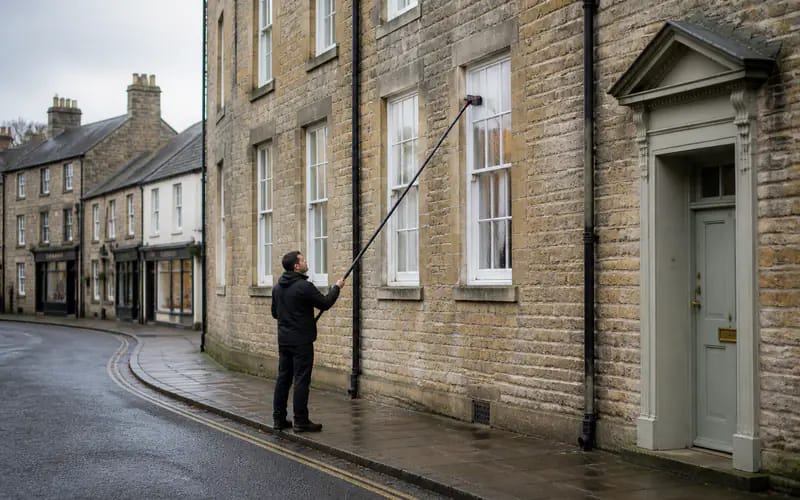
Listed buildings are structures of special interest that have specific rules regarding change and repair. If a commercial window cleaning method is to be used on listed buildings then special care must be taken to avoid damaging stonework, timber, and glass that cannot be replaced with identical materials.
Why Listed Status Still Matters
Routine cleaning of glass on a listed building does not require formal consent for cleaning the glass but the methods and equipment used to clean around the glass can cause significant damage to the old fabric of a building and therefore need to be treated with similar care and respect as other work to the old building. As outlined in the Institute of Historic Building Conservation’s guide to caring for historic building fabric gentle and reversible methods should be used on buildings pre-20th century.
Choosing Gentle Cleaning Methods
Single-glazed sashes, leaded lights and hand-finished glass suffer greatly from harsh cleaning methods and equipment. Commercial window cleaners working in Gloucester use water-fed pole systems with soft-bristle brushes and mild pH-neutral cleaning solutions that gently sweep dirt from surfaces without forcing water through old putty lines or worn seals. This type of cleaning method is used for low-pressure, controlled cleaning of glass surfaces on old buildings, where water shot at high pressure and great speed would do harm.
Protecting Mortar, Render and Stone Surrounds
Moisture can penetrate through the frames of older buildings and cause damage to the surrounding mortar, render and stonework. Traditional lime mortar and rendered buildings are more porous than modern, cement-based alternatives and can suffer from frost damage and crumbling if left saturated. The operator must take particular care when cleaning windows that are adjacent to vulnerable masonry and check the pointing and condition of the render before commencing work. Additionally, care must be taken not to direct water down into any cracks or gaps in the frame itself.
Looking After Original Timber Sash Frames
Original sash windows have linseed putty used to join the frames together and traditional paint used on the frames. These are very sensitive to strong detergents and even to solvent-based cleaners. Mild solutions and soft cloths or brushes are best for cleaning the frames of sash windows. There are many powerful cleaners on the market that are specifically designed to tackle tough grease and limescale, but these would be far too harsh for sash windows. Even if the paint is flaking or the putty is brittle, it’s still best to note these and report them rather than try to clean them. More damage could be caused by scrubbing at flaking paint or brittle putty and this could expose bare timber to the weather.
Picking Access Equipment Without Damage
A variety of commercial access equipment is used to reach windows on upper floors of listed buildings including freestanding ladders, extended pole systems and cherry pickers. In most cases access equipment is left on site and freestanding ladder access is preferred over the use of scaffolding with scaffold ties which can cause damage to masonry. Access equipment users must also ensure that they are properly trained to use the equipment safely and that their employer is a recognised safe working employer. The employer’s workplace safety accreditation such as the British Safety Council’s Safety Certificate can provide some assurance that a potential contractor will work safely on a listed building site. Commercial Window Cleaners Gloucester is covered in more detail at Into Cleaning.
Handling Delicate Original Features
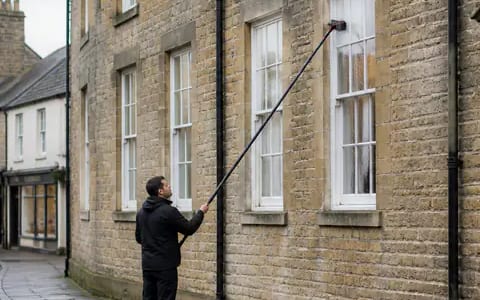
An older window may have very delicate features such as lead cames holding together small panes of glass, very slender Georgian glazing bars or even hand-blown glass with all the characteristics of this type of glass such as ripples and bubbles within the glass. A soft-bristle brush and some clean water will be all that is required to clean between glass within a sash. Gently sweeping any dirt or grime away with the brush will prevent any damage to the above mentioned features. It is also very important to inspect the area prior to cleaning in order to spot any such features and take the required precautions to avoid damage.
Dealing with Algae, Lichen and Biological Growth
Some list buildings are near trees, a churchyard or are of porous construction to form part of a boundary or other feature and so can suffer from growth of algae and lichen. These need to be cleaned from time to time using a soft brush and water to prevent them building up and needing to be treated with a strong biocide.
Checking With the Conservation Officer
There are few instances where a single clean of a listed building requires formal consent in advance, such as when cleaning above a certain height. However, a single clean can involve a great deal of ‘work’ and it is wise to check with the conservation officer in advance for the listed building to confirm your proposals are acceptable. Furthermore, there are many situations where cleaning a listed building involves repair and, therefore, would need to be commissioned through formal tender processes via local resources and consumer and trading standards information for UK businesses.
The windows of listed buildings can be just as clean as any other window. It just needs to be done in a different way.