Choosing the right vacuum cleaner can feel overwhelming when you walk into a store or browse online. The market offers numerous models with different features, designs, and price points. However, understanding what makes each type unique will help you make an informed decision that suits your home and lifestyle.
This comprehensive guide walks you through everything you need to know about selecting the perfect vacuum cleaner for your needs.
Understanding Your Cleaning Needs
Before diving into specific models, take a moment to assess your home environment. Do you have hardwood floors, carpets, or a combination of both? Are pets part of your household? How large is your living space? These questions matter because they directly influence which vacuum will work best for you.
Additionally, consider your physical capabilities and storage space. Some models are heavier and require more effort to maneuver, while others are lightweight and easy to carry upstairs. Furthermore, think about how often you plan to vacuum and whether you prefer corded or cordless convenience.
Upright Vacuum Cleaners
Upright models remain the most popular choice in many households. These machines stand vertically and typically feature a rotating brush roll that agitates carpet fibers to loosen embedded dirt and debris.
The main advantage of upright vacuums is their powerful suction and wide cleaning path. They cover large areas quickly, making them ideal for homes with extensive carpeting. Moreover, they usually come with larger dust bins or bags, reducing the frequency of emptying.
However, upright vacuums can be bulky and challenging to store in small spaces. They also tend to be heavier than other options, which might cause difficulty when carrying them between floors. Despite these drawbacks, their effectiveness on carpets makes them a solid choice for many families.
Canister Vacuum Cleaners
Canister vacuums consist of two parts: a wheeled unit containing the motor and dust collection system, connected by a hose to a separate cleaning wand. This design offers remarkable versatility and maneuverability.
These vacuums excel on hard floors and are particularly effective for cleaning stairs, upholstery, and hard-to-reach areas. The separate canister makes the wand lighter and easier to control, allowing you to clean curtains, ceiling corners, and furniture with minimal effort.
On the downside, canister models require more storage space than upright vacuums because of their two-piece design. Additionally, dragging the canister behind you can sometimes feel cumbersome, especially in cluttered rooms. Nevertheless, their adaptability makes them excellent for homes with varied flooring types.
Stick Vacuum Cleaners
Stick vacuums have gained tremendous popularity in recent years, particularly cordless models. These slim, lightweight machines are perfect for quick cleanups and daily maintenance cleaning.
The primary benefit of stick vacuums is their convenience. They’re easy to grab for spot cleaning, weigh very little, and store effortlessly in closets or corners. Cordless versions eliminate the hassle of dealing with power cords, giving you freedom to move throughout your home.
That said, stick vacuums typically have smaller dust bins and shorter battery life compared to traditional models. Their suction power, while improving with newer models, generally doesn’t match full-sized vacuums. Therefore, they work best as supplementary cleaners or for small apartments and condos.
Robot Vacuum Cleaners
Robot vacuums represent the cutting edge of automated home cleaning. These disc-shaped devices navigate your floors independently, using sensors to avoid obstacles and clean on a schedule you set.
The most obvious advantage is the hands-free operation. You can program your robot vacuum to clean while you’re at work or sleeping, maintaining consistently clean floors with minimal effort. Modern models can even empty themselves into larger base stations.
Conversely, robot vacuums struggle with certain obstacles like thick carpets, cords, and small objects left on floors. They also require regular maintenance to keep sensors and brushes functioning properly. While they’re excellent for maintenance cleaning, they shouldn’t replace deep cleaning with a traditional vacuum entirely.
Handheld Vacuum Cleaners
Handheld vacuums are compact, portable cleaning tools designed for quick jobs and tight spaces. They’re perfect for cleaning car interiors, countertops, and small spills.
These devices shine in their portability and ease of use. You can grab them quickly without any setup, making them ideal for cleaning up after meals or pet accidents. They’re also affordable compared to full-sized vacuums.
However, handheld vacuums have limited power and very small dust containers. They’re not suitable for cleaning entire rooms or large areas. Instead, consider them complementary tools that handle specific tasks your main vacuum might not reach easily.
Evaluating Suction Power and Performance
When comparing vacuum types explained across different categories, suction power stands out as a critical factor. Measured in air watts or pascals, higher numbers generally indicate stronger cleaning capability.
Nevertheless, raw power isn’t everything. The design of the cleaning head, brush roll quality, and airflow efficiency all contribute to overall performance. A well-designed vacuum with moderate power can outperform a poorly designed one with higher specifications.
Therefore, reading reviews and watching demonstration videos helps you understand real-world performance better than specifications alone. Pay attention to how different models handle various debris types, from fine dust to larger particles.

Filtration Systems and Air Quality
Filtration affects both cleaning effectiveness and indoor air quality. HEPA filters capture 99.97% of particles as small as 0.3 microns, making them essential for allergy sufferers.
Some vacuums feature multi-stage filtration systems that trap allergens and prevent them from recirculating into your home. This becomes particularly important if household members have asthma, allergies, or respiratory sensitivities.
Meanwhile, bagless models use cyclonic technology to separate dirt from air, while bagged versions contain debris more securely. Each system has its merits, so consider which aligns better with your preferences and health needs.
Conducting Your Own Cleaning Efficiency Test
Before making a final decision, you can perform a simple cleaning efficiency test at home or in the store. Sprinkle some flour or cereal on a carpet sample and see how each vacuum handles it.
Notice how many passes are required to remove all visible debris. Observe whether the vacuum spreads particles around or captures them effectively on the first attempt. Additionally, check how well it picks up along edges and in corners.
This hands-on approach provides valuable insights that specifications cannot convey. You’ll quickly discover which models deliver the performance you expect and which fall short.
Considering Maintenance and Durability
Every vacuum requires regular maintenance to perform optimally. Filters need cleaning or replacing, brush rolls require detangling, and dust bins or bags need emptying.
Some models demand more maintenance than others. Robot vacuums, for instance, need frequent brush cleaning and sensor wiping. Upright vacuums with complex brush systems might require occasional belt replacements.
Furthermore, consider the availability and cost of replacement parts. Choosing a reputable brand with readily available accessories ensures your vacuum remains functional for years. Reading user reviews about long-term reliability helps identify models that stand the test of time.
Assessing Noise Levels
Vacuum cleaners generate varying noise levels, typically ranging from 60 to 80 decibels. If you live in an apartment, have young children, or plan to clean during quiet hours, noise becomes an important consideration.
Canister and stick vacuums tend to operate more quietly than powerful upright models. However, newer technologies have helped manufacturers reduce noise across all categories.
Testing a vacuum in person allows you to gauge whether its sound level is acceptable. Alternatively, reviews often mention whether a model is particularly loud or surprisingly quiet.
Understanding Vacuum Pros and Cons by Surface Type
Different vacuums excel on different surfaces. Understanding these strengths helps you match the right tool to your home’s flooring.
Upright vacuums dominate on wall-to-wall carpeting, where their rotating brushes and strong suction extract embedded dirt effectively. Canister models transition seamlessly between hard floors and area rugs, offering gentle yet thorough cleaning.
Stick vacuums work well on hard surfaces and low-pile carpets but may struggle with plush, thick carpeting. Robot vacuums handle hard floors admirably but often lack the power for deep carpet cleaning.
Consequently, homes with mixed flooring might benefit from owning two complementary vacuum types rather than compromising with a single all-purpose model.
Examining Attachment and Accessory Options
Attachments expand your vacuum’s versatility significantly. Crevice tools reach narrow gaps, upholstery brushes clean furniture, and extension wands access high areas.
Premium models often include specialized attachments for pet hair removal, dusting delicate surfaces, or cleaning hard-to-reach vents. These additions can justify a higher price point if you’ll use them regularly.
However, don’t let an abundance of attachments sway your decision if you won’t actually use them. Focus on the tools that address your specific cleaning challenges rather than collecting accessories that will gather dust in storage.
Budget Considerations and Value Assessment
Vacuum cleaners range from under fifty dollars to over a thousand. While price often correlates with quality and features, expensive doesn’t always mean better for your situation.
Determine your budget early and identify must-have features versus nice-to-have additions. A moderately priced vacuum that meets your core needs often provides better value than a premium model with features you’ll rarely use.
Additionally, factor in long-term costs like replacement filters, bags, and potential repairs. Sometimes spending more upfront on a durable, well-designed vacuum saves money over time compared to repeatedly replacing cheaper models.
Warranty and Customer Support
A comprehensive warranty demonstrates manufacturer confidence in their product. Look for warranties covering at least two years, with some premium brands offering five years or more.
Equally important is responsive customer support. Research whether the manufacturer has a reputation for honoring warranties and helping customers resolve issues. Online reviews often reveal patterns of excellent or poor after-sale service.
Furthermore, check whether local repair services can work on your chosen vacuum model. Some brands maintain authorized service centers, while others require shipping units for repairs.
Making Your Final Decision
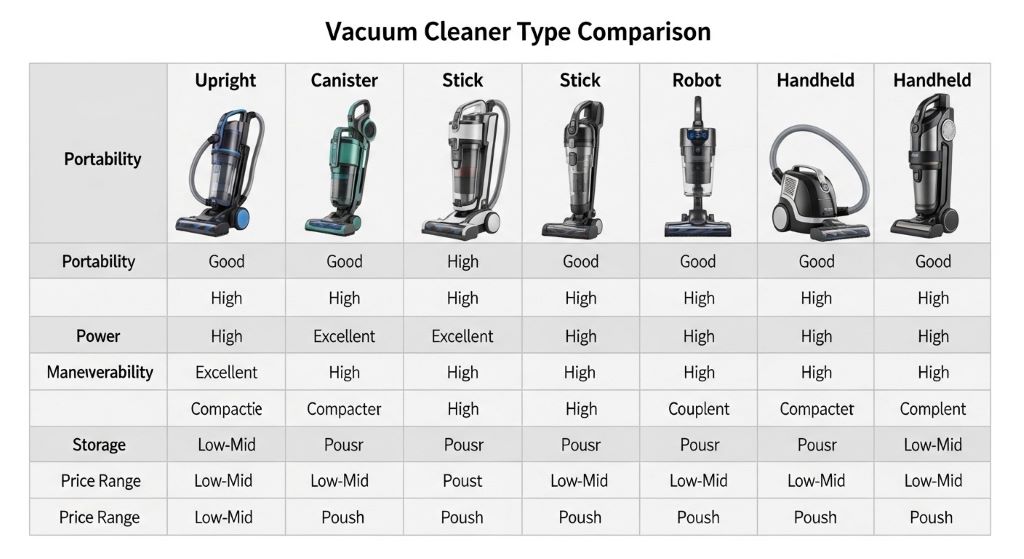
After researching vacuum types explained and weighing vacuum pros and cons, narrow your options to two or three finalists. Compare their specifications side by side, focusing on the features that matter most to you.
If possible, test your top choices in person or order from retailers with generous return policies. A week of real-world use reveals more than any amount of research.
Trust your experience with the vacuum’s weight, maneuverability, and ease of use. The best vacuum on paper might not feel right in your hands, and comfort matters for a tool you’ll use regularly.
Conclusion
Selecting the right vacuum cleaner requires balancing multiple factors including your home’s layout, flooring types, budget, and personal preferences. Upright vacuums offer powerful carpet cleaning, canister models provide versatility, stick vacuums deliver convenience, and robot vacuums automate maintenance cleaning.
By conducting a thorough cleaning efficiency test, examining vacuum pros and cons honestly, and understanding how vacuum types explained translate to real-world performance, you’ll make a confident purchasing decision. Remember that the perfect vacuum is the one that matches your specific needs rather than the one with the most features or highest price tag.
Invest time in research, read user reviews, and don’t hesitate to test models before committing. Your future self will appreciate the effort when you’re effortlessly maintaining clean, healthy floors for years to come.
Frequently Asked Questions
How often should I replace my vacuum cleaner?
Most quality vacuum cleaners last between five to ten years with proper maintenance. However, you should consider replacement when suction power noticeably decreases despite cleaning filters and clearing blockages, or when repair costs approach the price of a new model.
Are bagless vacuums better than bagged models?
Neither is inherently better; each has advantages. Bagless vacuums save money on replacement bags and let you see when they’re full. Bagged models typically contain allergens more securely and require less frequent filter cleaning. Choose based on your priorities regarding convenience and air quality.
What vacuum type works best for pet owners?
Upright vacuums with strong suction and specialized pet hair attachments generally work best for homes with shedding pets. Look for models with tangle-free brush rolls and HEPA filtration to manage pet dander effectively. Some canister models also excel at pet hair removal.
Can robot vacuums replace traditional vacuums entirely?
Robot vacuums excel at maintenance cleaning and keeping floors tidy between deep cleans. However, they typically lack the power and versatility for thorough cleaning, especially on thick carpets or in corners. Most homes benefit from using robot vacuums alongside a traditional vacuum for comprehensive cleaning.
How much should I spend on a good vacuum cleaner?
Quality vacuum cleaners typically range from $150 to $500 for residential use. While you can find functional models under $100, investing $200 to $300 usually provides better durability, performance, and features. Determine your budget based on home size, flooring types, and how frequently you’ll use the vacuum.
Related Topics:
Learn How to Make Spring Cleaning Fun : 7 Exciting Tips
Why Does My AC Throw Water? Troubleshooting a Leaky Air Conditioner