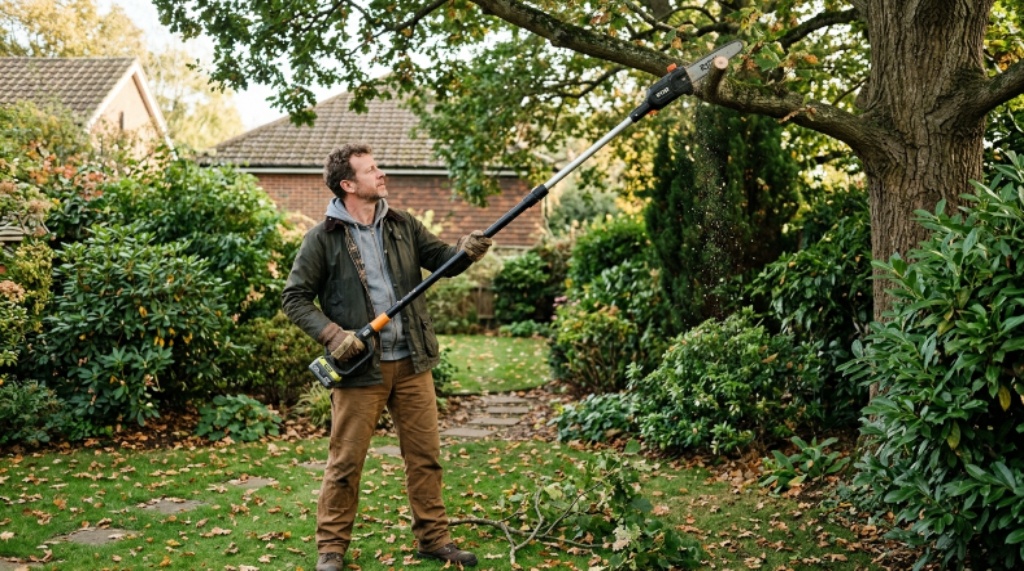
Keeping trees trimmed and tidy is a regular part of owning a home with a garden. Overgrown branches can block light, damage rooflines, and create safety hazards during storms. However, climbing a ladder with a chainsaw is dangerous, exhausting, and often unnecessary.
A cordless pole saw solves all of that. It lets you reach high branches safely from the ground, without a power cord limiting your movement or a petrol engine adding noise and fumes. The market is full of options, though, and choosing the right one takes a little knowledge.
This guide walks you through everything you need to know to find the best cordless pole saw for your garden and skill level.
What a Cordless Pole Saw Actually Does
A pole saw is essentially a small chainsaw mounted on the end of an extendable pole. The cutting head does the work while you stand safely on the ground below. Most models can reach between 2.5 and 5 metres, which covers the majority of pruning tasks around a typical home.
Cordless versions run on rechargeable lithium-ion batteries. This makes them far more convenient than petrol alternatives and much safer to use at height than electric models tethered to a long extension cord. Additionally, they start instantly with a button press and require very little maintenance between uses.
They are not designed for felling large trees or cutting thick trunks. However, for routine pruning, clearing deadwood, and shaping garden trees, a cordless pole saw is one of the most useful tools a homeowner can own.
Key Features to Look for Before You Buy
Shopping for a pole saw without knowing what to look for leads to disappointment. The features below separate a genuinely useful tool from one that frustrates you after the first session.
Bar Length and Cutting Capacity
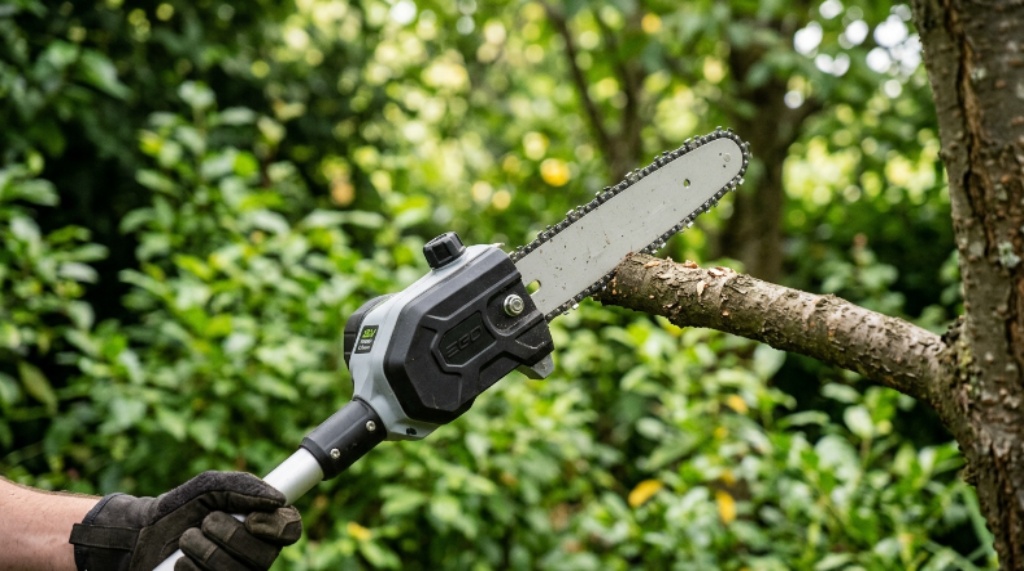
The bar is the blade guide that the cutting chain runs along. Most cordless pole saws have bars between 20 and 30 centimetres. A longer bar cuts through thicker branches in a single pass. A 20 cm bar handles branches up to about 15 cm in diameter comfortably, which suits most garden trees. For larger branches, a 25 or 30 cm bar gives you more capacity without needing multiple passes.
However, a longer bar also makes the head heavier and more awkward to manoeuvre at height. Therefore, match the bar length to the actual branches you plan to cut rather than always reaching for the biggest option.
Pole Length and Extension Options
Most pole saws come with a fixed pole length or a two-section telescoping design. Telescoping poles let you adjust the reach to suit the task. A shorter setting gives you more control for lower branches, while a fully extended pole reaches those higher limbs without a ladder.
Look for a model that extends to at least 3 metres. Some premium models reach 4.5 to 5 metres. Additionally, check that the extension mechanism locks firmly and does not wobble or flex under cutting pressure, as movement at the cutting head reduces both accuracy and safety.
Weight and Balance
This is where many buyers go wrong. A pole saw might feel fine in a shop, but after ten minutes of holding it above your head, even a small difference in weight becomes very significant. A lightweight saw that balances well near the handle is far easier to use for a full pruning session than a heavier model that tips forward toward the cutting head.
Look for total tool weight including the battery. Many manufacturers quote the tool weight without the battery, which can be misleading. A battery-powered pole saw that weighs under 3.5 kilograms in total is generally manageable for most adults over a typical garden session.
Chain Speed and Motor Power
Chain speed is measured in metres per second. A faster chain cuts more efficiently and gets through wood with less effort. Most cordless pole saws run between 3.5 and 6 metres per second. For light pruning of small branches, the lower end is fine. For denser hardwood or thicker limbs, a faster chain makes a noticeable difference.
Motor power is linked to the battery voltage. Higher voltage generally means more power. Models running on 18V to 20V are suitable for light to moderate work. Models running on 36V or 40V are more powerful and better suited to demanding tasks and heavier branches.
Understanding Battery Systems
The battery is the heart of any cordless tool. Choosing the right one affects how long you can work and how much the whole system costs over time.
Voltage and Runtime
Higher voltage delivers more power but does not always mean longer runtime. Runtime depends on battery capacity, measured in amp hours (Ah). A 4Ah battery on a 20V tool will typically run longer than a 2Ah battery on the same tool under the same conditions. For most garden pruning jobs, a 4Ah battery gives you 30 to 45 minutes of active cutting time, which is plenty for a typical session.
Compatibility With Other Tools
Many brands build their batteries around a shared platform. If you already own cordless tools from a particular brand, choosing a pole saw from the same family lets you use your existing batteries. This saves money and simplifies charging. Therefore, check compatibility before you buy rather than committing to a new battery system unnecessarily.
Spare Batteries and Charging Time
For longer pruning sessions or larger properties, a spare battery is a worthwhile investment. Standard chargers typically take one to two hours to fully charge a 4Ah battery. Fast chargers can cut that to 30 to 45 minutes. If you plan to work through a full morning of tree maintenance, either a fast charger or a second battery keeps your workflow uninterrupted.
Safety Features That Should Not Be Overlooked
A battery-powered pole saw operates a moving chain at speed. Treating it with respect and choosing a model with proper safety features is not optional.
Chain Brake
A chain brake stops the chain instantly if the saw kicks back or if you release the trigger. This is a standard safety feature on professional chainsaws and should be present on any pole saw you consider. Some budget models omit it to reduce costs. Do not buy any saw without one.
Trigger Lock-Off
A trigger lock-off prevents the saw from starting accidentally if the trigger is bumped during transport or while repositioning. It requires a deliberate two-step action to start the tool, which adds a valuable layer of protection when you are working overhead.
Adjustable Head Angle
Many pole saws allow the cutting head to pivot to different angles. This lets you position the bar optimally for different branch orientations without awkward body positioning. Additionally, cutting at the right angle reduces kickback risk and improves cut quality.
What to Expect at Different Price Points
Cordless pole saws range from around $80 to over $400. Understanding what you get at each level helps you spend wisely.
Entry-level models under $120 are adequate for very light, infrequent use on small branches. They typically run on lower-voltage batteries and have shorter bars. Build quality is often modest, and runtime is limited.
Mid-range models between $150 and $250 offer the best value for most homeowners. They run on higher-voltage batteries, have better chain speed, and are built to last through regular use over several seasons. This is where the most capable lightweight saw options tend to sit.
Premium models above $280 are designed for frequent use, larger properties, or heavier branches. They often feature longer bars, faster chains, more powerful motors, and better-quality components throughout. Professional landscapers and serious gardeners are the target audience.
Tips for Getting the Most From Your Pole Saw
Buying the right tool is only half the equation. Using it correctly makes every session safer and more productive.
- Always wear protective eyewear, a hard hat, and gloves when operating a pole saw overhead.
- Stand to the side of the branch you are cutting, never directly below it.
- Cut large branches in sections rather than attempting a single cut through the full diameter.
- Keep the chain properly tensioned and lubricated before every session.
- Store the tool with the battery removed and the chain guard in place.
Conclusion
Finding the best cordless pole saw comes down to matching the tool to your specific needs. Think about the size of the branches you trim most often, the height you need to reach, and how long a typical pruning session lasts. From there, focus on bar length, pole reach, total weight, and battery voltage to narrow your options.
A well-chosen battery-powered pole saw makes tree maintenance safer, faster, and far less exhausting. A lightweight saw that balances well and runs on a capable battery can handle years of garden work without complaint. Spend a little time comparing your options before buying, and you will end up with a tool that makes every pruning session feel effortless.
Frequently Asked Questions
How thick a branch can a cordless pole saw cut?
Most cordless pole saws with a 20 cm bar can cut branches up to 15 cm in diameter comfortably. Models with 25 to 30 cm bars can handle branches up to 20 to 25 cm. Always check the manufacturer’s specifications for the maximum recommended cutting diameter for your specific model.
How long does a cordless pole saw battery last?
Runtime depends on battery capacity and the intensity of the work. A 4Ah battery typically provides 30 to 45 minutes of active cutting. On lighter tasks such as trimming small branches, runtime can extend to an hour or more. A spare battery extends your working time significantly.
Are cordless pole saws safe for beginners to use?
Yes, provided they are used correctly. Always wear appropriate protective gear, read the instruction manual before your first use, and start with smaller branches to build confidence. Models with chain brakes and trigger lock-off features add important safety protection for less experienced users.
How do I maintain the chain on a cordless pole saw?
Keep the chain properly tensioned by checking it before every session. A correctly tensioned chain has a small amount of movement but does not sag. Keep the bar oil reservoir filled so the chain stays lubricated during use. Sharpen or replace the chain when it begins to tear rather than slice cleanly through wood.
Can I use a cordless pole saw in wet conditions?
Most manufacturers advise against using power tools in rain or on wet days. Wet wood is harder to cut and increases the risk of the chain slipping. Wet conditions also create slip hazards underfoot. Always check the manufacturer’s guidance on weather conditions before operating your pole saw outdoors.