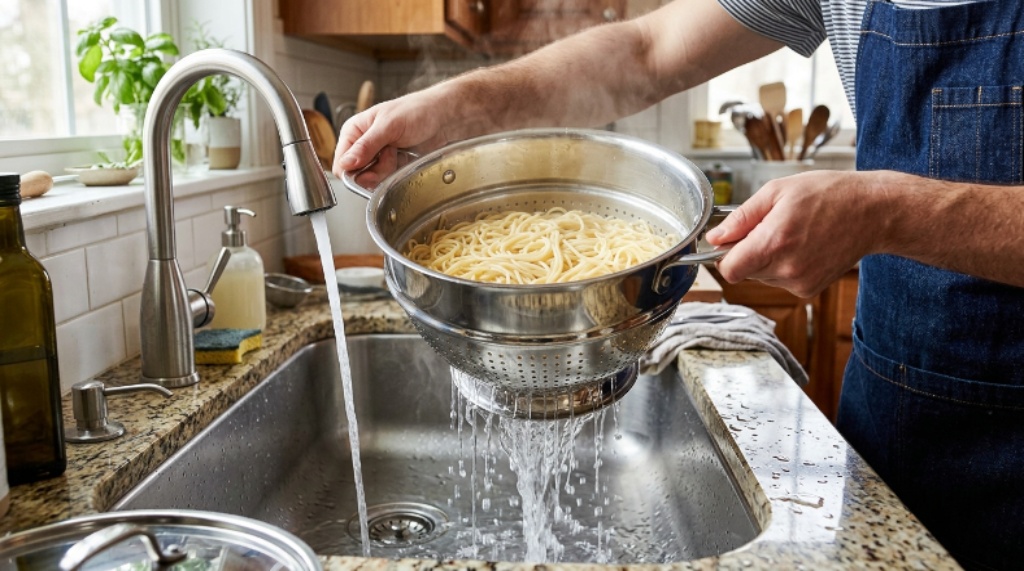
A pasta strainer is one of those kitchen tools you use almost every day. It drains boiling water, rinses vegetables, and handles everything from delicate pasta shapes to heavy potatoes. However, not all strainers are built the same. A poor-quality one can rust, warp, or fall apart within months.
Choosing the right stainless steel strainer means understanding what separates a long-lasting kitchen tool from a cheap disappointment. This guide walks you through every key factor so you can make a confident, informed decision.
Why Stainless Steel Is the Best Material for a Pasta Strainer
Stainless steel has become the standard material for quality kitchen tools, and for good reason. It is strong, easy to clean, and does not absorb odors or bacteria the way plastic does. Additionally, it handles high temperatures without warping or releasing harmful chemicals.
Other materials like aluminum or plastic may seem appealing due to their lower price. However, aluminum reacts with acidic foods like tomatoes and can leave a metallic taste in your pasta water. Plastic strainers melt or deform when exposed to boiling water over time. Stainless steel avoids both of these problems entirely.
The key is choosing the right grade of stainless steel. Not all stainless steel performs equally in a kitchen environment. Understanding the grade system will save you from buying something that looks great in the store but disappoints quickly at home.
Understanding Stainless Steel Grades
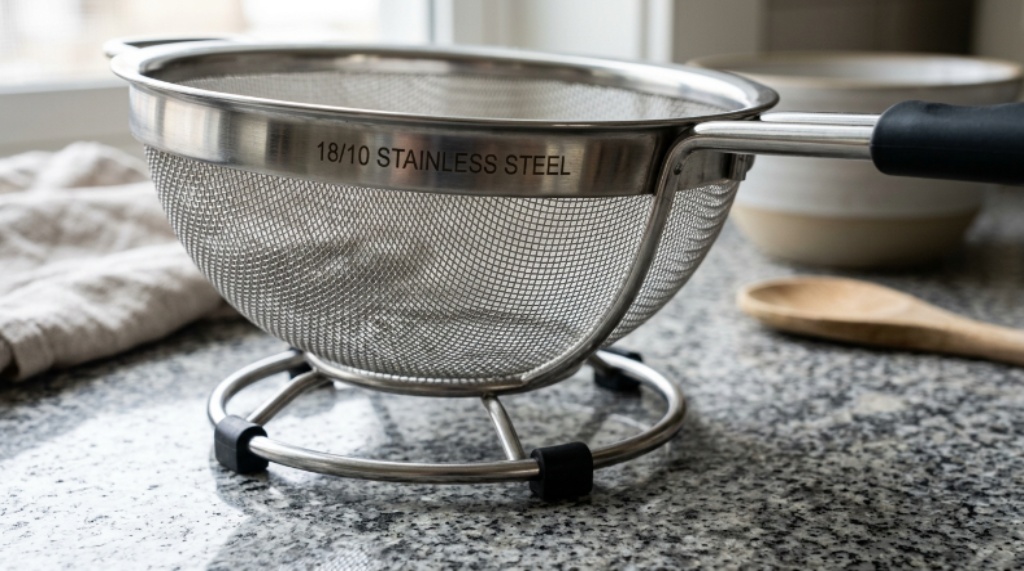
Stainless steel is graded by its alloy composition. The two most common grades used in kitchen tools are 18/8 and 18/10.
What the Numbers Mean
The first number refers to the percentage of chromium in the alloy. The second number refers to nickel content. Chromium is what makes stainless steel resistant to rust and staining. Nickel adds shine and provides additional resistance to corrosion.
18/8 stainless steel contains 18 percent chromium and 8 percent nickel. It is strong, affordable, and performs well in most kitchen environments. 18/10 stainless steel contains slightly more nickel, which makes it a little more resistant to discoloration and corrosion over time. Both are excellent choices for a pasta strainer, though 18/10 is often found in higher-quality products.
What to Avoid
Strainers labeled simply as “stainless steel” without specifying a grade can sometimes be made from lower-quality alloys. These may contain less chromium, which reduces rust resistance significantly. Therefore, always look for a product that clearly states its steel grade on the packaging or product listing.
Key Features That Define a Durable Colander
Beyond the steel grade, several design and construction features determine whether a strainer will stand up to years of daily use. A durable colander is not just about material. It is about how that material is shaped, reinforced, and finished.
Gauge and Thickness
The gauge of a metal describes how thick it is. A lower gauge number means thicker steel. For pasta strainers, look for a gauge between 18 and 22. Thicker steel resists denting, holds its shape under the weight of heavy pasta, and does not flex when you grip the handles.
Thin, flimsy strainers may cost less upfront, but they buckle easily and can warp when exposed to sudden temperature changes. A well-made strainer feels solid and substantial when you hold it. If it feels light and hollow, that is a warning sign.
Hole Size and Pattern
The size and pattern of the drainage holes affect how well the strainer performs. Holes that are too large will let small pasta shapes slip through. Holes that are too small drain slowly and trap starchy debris that is difficult to clean.
For most pasta types, holes between 3 and 5 millimeters in diameter strike the right balance. Some strainers use a punched hole design while others use a woven mesh insert. Punched holes are generally more durable. Mesh inserts can trap food particles and are harder to clean thoroughly over time.
Handle Design and Attachment
Handles are one of the most commonly overlooked aspects of a pasta strainer. They need to be long enough to keep your hands away from steam and boiling water. They also need to be securely attached to the bowl of the strainer.
Look for handles that are welded or riveted directly to the body. Handles attached with screws or adhesive tend to loosen over time, especially with repeated washing. Additionally, rubberized or silicone grip handles are practical, but make sure the grip material is heat-resistant and securely bonded to the steel core.
Base and Stability
A strainer that sits flat in the sink frees both hands while you drain pasta. Most quality strainers include either a footed base or a wide, stable rim that rests on the edge of a pot or sink. Footed bases are especially practical because they keep the strainer elevated above any water pooling at the bottom of the sink.
Check that the feet are the same material as the strainer body. Rubber feet can deteriorate over time. Metal feet that are formed from the strainer body itself are the most durable option.
Why Rust Resistance Matters More Than You Think
Rust is the most common reason kitchen strainers end up in the bin. A rust-proof strainer protects your food from contamination, keeps your kitchen hygienic, and maintains its appearance over many years of use.
Rust forms when iron in steel is exposed to oxygen and moisture. In a kitchen environment, this combination is constant. High chromium content in the steel forms a thin, invisible oxide layer on the surface that acts as a barrier against rust. This layer repairs itself when scratched, which is one of the remarkable qualities of true stainless steel.
However, lower-quality alloys with insufficient chromium cannot maintain this protective barrier effectively. They begin to show rust spots within months, especially around drainage holes and weld points where the steel is thinner or more exposed to moisture.
To keep even a high-quality rust-proof strainer in top condition, dry it after washing rather than leaving it to air dry in a damp sink. Additionally, avoid leaving it in contact with cast iron or carbon steel pans, as these can transfer iron particles that cause surface rust known as tea staining.
Size and Capacity: Choosing What Fits Your Cooking Habits
Pasta strainers come in a range of sizes, typically measured by their capacity in quarts or liters. The right size depends on how much you cook and for how many people.
A 3-quart strainer is suitable for single servings or small households. A 5-quart model handles most standard pasta portions for two to four people comfortably. For larger households or batch cooking, a 7-quart or larger strainer is more practical.
Consider also the diameter of your strainer relative to your sink. A strainer that is too wide to sit securely in your sink or on your pot becomes awkward and unsafe to use. Measure your sink basin and pot openings before purchasing if size is a concern.
Dishwasher Safety and Long-Term Care
Most stainless steel strainers are marketed as dishwasher-safe. However, repeated dishwasher cycles can gradually dull the surface finish and stress welded joints over time. Hand washing with warm soapy water is gentler and extends the life of your strainer significantly.
If you prefer the convenience of a dishwasher, place the strainer on the top rack away from the heating element. Avoid using harsh detergents that contain bleach or chlorine compounds, as these can damage the chromium oxide layer and reduce rust resistance.
Additionally, if your strainer develops water spots or light staining, a small amount of white vinegar applied with a soft cloth restores the surface quickly. Do not use steel wool or abrasive scrubbers, as these scratch the surface and can compromise its protective properties.
What to Look for When Buying Online
Purchasing a pasta strainer online offers more choice but requires careful attention to detail. Product descriptions can be vague, and photos do not always convey quality accurately.
Always check the steel grade, gauge, and country of manufacture in the product specifications. Read customer reviews with an eye for comments about durability, handle strength, and rust resistance after extended use. Reviews from customers who have owned the product for more than six months are particularly valuable.
Look for brands that offer a warranty or satisfaction guarantee. A manufacturer that stands behind their product is more likely to use quality materials. Therefore, a warranty is often a reliable indicator of long-term durability.
Conclusion
Choosing a durable stainless steel pasta strainer is not complicated once you know what to look for. Start with the steel grade, and prioritize 18/8 or 18/10 alloys for reliable performance and corrosion resistance. Pay attention to gauge thickness, hole size, handle construction, and base stability. A rust-proof strainer with securely welded handles and a solid footed base will serve your kitchen for many years.
Size matters too. Match your strainer to the cooking volumes you handle regularly. Take care of it properly by drying it after each use and avoiding harsh cleaning products. A well-chosen, well-maintained stainless steel strainer is one of the best small investments you can make in your kitchen.
Frequently Asked Questions
What is the best stainless steel grade for a pasta strainer?
18/10 stainless steel is the top choice for kitchen tools. It contains higher nickel content, which adds extra resistance to corrosion and staining. However, 18/8 is also excellent and widely available at a lower price point. Both outperform ungraded stainless steel options.
How do I prevent my stainless steel strainer from rusting?
Dry your strainer thoroughly after every wash rather than leaving it wet in the sink. Avoid contact with cast iron or carbon steel cookware, and never use bleach-based cleaners. Choosing a strainer with a clearly specified high-chromium steel grade is the most important preventive step.
What size pasta strainer do I need for a family of four?
A 5-quart strainer is the standard recommendation for a family of four. It handles a full pound of dried pasta comfortably without overflowing. If you regularly cook larger batches or use the strainer for other tasks like rinsing vegetables, a 7-quart model offers more flexibility.
Are pasta strainers with mesh inserts worse than those with punched holes?
Mesh inserts are better for very fine foods like quinoa or small grains. However, for pasta and general kitchen use, punched hole designs are more durable and significantly easier to clean. Food particles get trapped in mesh more readily, and the mesh can loosen or tear over time.
Can I use a pasta strainer in the dishwasher safely?
Most stainless steel strainers are dishwasher-safe, but hand washing extends their lifespan. If you use a dishwasher, place the strainer on the top rack and use a mild detergent free from bleach or chlorine. Over time, the dishwasher’s heat and strong detergents can dull the finish and weaken welded joints.